
The Chelveston Renewable Energy Park is located approximately 5.5 km to the east of Rushden, and is bisected by the administrative boundary between Bedford Borough Council and East Northamptonshire Council.
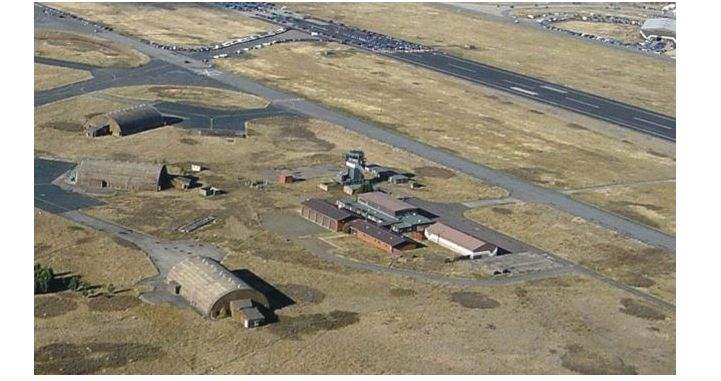
The Park was formerly the RAF Chelveston Airfield, a military airfield opened in 1941 which was used initially for the central gunnery school. The airfield was subsequently used by both the RAF and the US Army Air Force during World War II as a heavy bomber airfield.
The airfield continued to be used for military purposes following the war and was adapted to accommodate bombers carrying nuclear payloads, and following this the airfield was commissioned as a military radio transmitter site.
In recent years, the site has been transformed into a renewable energy park, beginning with a biomass anaerobic digestion plant permitted in 2008, and the conversion of former Ministry of Defence buildings to house bio-oil electricity generating engines in 2009.
Wind turbines
Savills has been involved with the ongoing development of the Chelveston Renewable Energy Park since 2011 when the Wimborne planning team was appointed to prepare and submit an appeal against the Council’s refusal for nine proposed 125m to tip wind turbines. Following the public inquiry, at which Savills gave evidence, planning permission was granted in June 2012. The wind turbines are now erected and fully operational.
2013 solar PV arrays
Following this success, the Savills Wimborne planning team was instructed to proceed with the preparation and submission of planning applications for solar photovoltaic arrays. Whilst the overall Park is located on a plateau and generally not visible from most surrounding areas, there are a number of footpaths which cross the site, and local residents were concerned about the potential loss of amenity. Through careful siting, design, and the inclusion of new hedgerow planting Savills was able to secure planning permission in 2013 two solar arrays, one in each of the local authority areas, and subsequent extensions to these, which have since been constructed and are exporting electricity to the grid.
2014 solar PV arrays
To further maximise the use of this previously developed site, the Savills team coordinated the EIA for a further two areas of solar array, and produced the ES and all supporting documents required for submission with planning applications. These arrays were approved in 2014 and are also now constructed and operational.
2015 solar PV array
In 2015, a similar application with an EIA and ES was prepared by the Wimborne team for an additional solar array, in this case wholly within the Bedford Borough Council area. Given the previous developments, careful consideration of the potential cumulative effects of this proposal were required to ensure that the development was appropriate. The application was approved in September 2015, but construction has yet to commence on this part of the overall Renewable Energy Park.
2016 B2 Manufacturing Building and Associated B1 Office Building
To enable the construction of the approved solar array the Park owner is pursuing the development of a manufacturing facility at the site to construct the solar panels and associated framework themselves. Savills prepared the application documentation and submitted an application for a 3,875 sq m (41,710 sq ft) manufacturing facility and associated 810 sq m (8,718 sq ft) office/research building arranged over three floors adjacent to the manufacturing building. Planning permission for this development was granted in April 2016.
Energy storage facility
Savills was instructed to prepare a planning, design and access statement for a 20MW energy storage facility proposed within the Chelveston Renewable Energy Park, and to coordinate the various specialist assessments required to accompany the application. A key challenge was the perception that the site was open countryside, and the cumulative effects resulting from any new permanent buildings in the area. To minimise the potential effects of the development, Savills advised on maximum areas which could be developed and the most suitable locations within the renewable energy park. A robust planning, design and access statement was produced detailing the need case for the development, and providing justification against adopted and emerging policies. Critically, justifying the development against the Neighbourhood Development Plan document, including a thorough explanation of the design rationale applied and how this related to the character of the nearby buildings and wider renewable energy park.
The planning application and planning, design and access statement were produced within the client's stringent timescales, less than four weeks from instruction, and within budget. Submission and management of the determination process was undertaken by Savills, with rebuttals to consultation responses from the Parish Council, the Police Community Safety Department, and the County Council Environmental Health Officer to address concerns and recommendations. The planning application was unanimously approved by the Planning Management Committee in June 2017, ahead of the 13-week determination deadline.
In summary, the Wimborne planning team was instrumental in developing the proposals by providing advice to the client regarding the potential issues, locations within the overall Park for each phase of development, and suitable mitigation measures. Throughout the process the team was in close contact with planning officers at both local authorities, and provided a number of written responses to comments and objections received from the public. In addition to this, the team liaised with specialist consultants employed by the client, as well as their counterparts in the local and county councils to ensure that all pertinent issues were addressed prior to the applications being considered by planning committees.
The Chelveston Renewable Energy Park demonstrates how various renewable energy technologies can be co-located at an appropriate location which makes use of previously developed Brownfield land. Overall, the Chelveston Renewable Energy Park has the installed or approved capacity to generate enough electricity to supply the annual needs of between 35,000 – 40,000 homes (More than half the homes in Bedford Borough, or a third of the homes in Milton Keynes), and will save more than 1.7million tons of CO2 being released to the atmosphere over its lifetime.
The Park continues to be used by a tenant farmer for grazing sheep and cattle, with the sheep allowed to graze beneath the solar panels avoiding the need to mow the grass. In addition to this, the renewable energy developments are accompanied by almost eight miles of new hedgerows and areas of woodland which will improve the overall biodiversity value of the Park, which was previously lacking due to the former military use of the site, and improved drainage arrangements.