
.jpg "The Savills Portfolio")
The timeline for introducing new environmental and agricultural policy is coming under increased pressure.
Progress on the Environment Bill so far will be lost as Parliament dissolves due to the approaching general election. Farmers can however act now to make sure their businesses are prepared for change; an efficient, profitable business with diverse income streams would be well placed when direct support payments are phased out. Our Spotlight on Farm Diversification explores the latest diversification trends. It is launched alongside Defra opening the RDPE Growth Programme, which offers grants of up to £750,000 towards diversification projects, and news that £50 million has been made available to kick-start the market for sequestered woodland carbon.
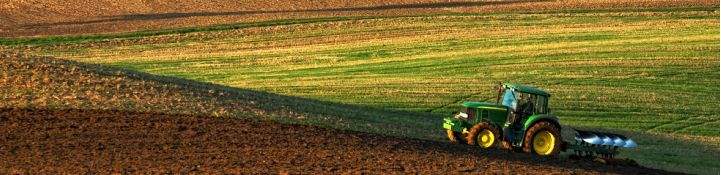
FOOD & FARMING
Spotlight on Farm Diversification
Traditional farming is set to be transformed over the next decade so it is important to put your farm business under review in order to make the most of your assets. Our Spotlight on Farm Diversification explores opportunities for the agricultural industry and the latest diversification trends. For successful diversification we recommend:
· Placing the customer at the heart of every business decision, to understand what they need and value.
· Tapping into consumer mega trends, which favour wellness, the environment and sustainable living; and experience rather than possessions.
· Considering how the farm’s natural assets can be used for potential projects.
Government funding is available to support rural diversification projects. The RDPE Growth Programme has just opened and offers grants between £20,000 and £750,000 for business development, food processing and rural tourism infrastructure. If you have a diversification proposal, an expression of interest must be submitted by 16 February 2020. We have prepared a briefing note on the grant scheme, please contact Stuart Nicholls, Duncan Winspear or Ashley Lilley if you would like to discuss this opportunity.
Support for farmers across the UK
3,677 farmers in England will share £22 million to invest in new equipment which saves time or boosts efficiency. Those successful in the second round of the Countryside Productivity Small Grants scheme should now be receiving confirmation of their success. Grants must be accepted using the acceptance portal on GOV.UK by 10 November. Before accepting, the Rural Payments Agency is encouraging farmers to double check with their suppliers that the items they wish to order are available, and also to order early. There is a deadline of 31 May 2020 for claiming the funding and it cannot be claimed unless the item has been delivered. A third and final round of the scheme will open in autumn 2020.
The Scottish Government has announced how it will distribute £80 million of the £160 million it was awarded by the Chancellor Sajid Javid following the recent Bew Review into the historic allocation of ‘convergence funding’ between the countries of the UK. The initial £80 million will be distributed to support active farmers and crofters, with a focus on those who farm in marginal uplands, hill farms and island areas. Rural Economy Secretary Fergus Ewing said “I believe this approach gets the money to where it needs to be”. Andrew McCornick, NFU Scotland’s President, disagreed, suggesting that £13 million is going to be used to fund an upland grazing scheme to cover for the Less Favoured Area Support Scheme budget shortfall. He described it as a “missed opportunity and a blow to beleaguered Scottish farmers and crofters”.
Some encouraging news for farmers: a ComRes survey has found that 62% of the public strongly back the idea of supporting British farmers with taxpayer funds to ensure a continued supply of domestically produced food. NFU Cymru President John Davies said “the findings of this poll make for welcome reading” and it was “particularly pleasing to see… respondents believe farmers should receive support from the taxpayer”. A larger proportion (84%) said they wanted any imports to match UK standards. 79% said they were ‘proud’ of the British countryside and the rural communities who sustain it. The survey questioned more than 2,000 British adults in September. It was commissioned by the British Guild of Agricultural Journalists.
Mixed fortunes for Scottish livestock
Breeding sow numbers in Scotland are close to their highest levels since 2011 and up 20% on last year. Growth is being attributed to a number of developments, including the approval of the Brechin slaughter plant for export to China and the takeover of the UK operations of the processor Tulip. Prices for pigs are currently more than 6% higher than this time last year and back to levels seen in autumn 2017.
In stark contrast, beef prices are 12% lower and lamb prices 1% lower than a year ago. The number of beef cows continues to decline and stands 9% lower than a decade ago. The number of dairy cows has increased by 4% in the past decade but the beef herd continues to account for 70% of the breeding cows in Scotland. The overall size of the Scottish cattle breeding herd therefore continues to fall. The number of calves registered in Scotland in the 12 months to June 2019 fell 1.5%, continuing the trend of the past three years. Overall, statistics from the June 2019 Agricultural Census show the total number of cattle is at its lowest point since the 1950s.
The Scottish dairy industry has also been hit by bad news as First Milk has confirmed its Campbeltown Creamery will close after it failed to find a buyer. A group of dairy farmers had launched a crowdfunding campaign to save the creamery but this was unsuccessful. First Milk will continue to buy milk from its suppliers on the same basis as before. Muller has also been reviewing its operations and will buy less milk in Scotland; 14 dairy farmers have received 12 months’ notice on their contracts whilst others will face increased haulage charges.
Farmland letting remains subdued
According to the Central Association of Agricultural Valuer’s (CAAV) Agricultural Land Occupation Survey, very little land changed hands in the year to 31 October 2018, with fresh lettings falling by 15% to 4,651 acres. The CAAV attributes this to area payments which reward the occupation of land and lead to it not being used as effectively as it could be. Given current levels of uncertainty, it is not surprising to see that both owners and prospective tenants are being cautious and agreeing shorter tenancies. The CAAV’s results show the average length of FBTs (let for a year or more) fell from 4.98 years in 2017 to 4.14 years in 2018, a trend which is consistent with Savills Research. In our blog the ‘Tenanted land sector awaits direction’ we discussed how uncertainty linked to the proposed reform of farm support and tenancy rules was encouraging farmers to defer decision making. The approaching general election will exacerbate this, and it is unlikely that the tenancy reform consultation’s overdue results will be published before the end of the year.
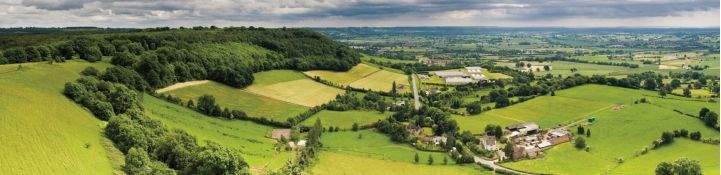
POLICY
What does a general election mean for rural policy?
Despite recent progress, the Environment Bill will fall because Parliament dissolves on 6 November and, unlike a prorogation, it is not possible for public Bills to be carried over from one Parliament to another. This is due to the convention that a current government should not bind a future government. The parliamentary time lost to the election period also puts further pressure on the timeline for getting an Agriculture Bill, which is required to deliver post 2020 farm support, in place. Over in Europe, CAP reform plans are also not progressing on schedule; the Commission has just delayed implementation of the new CAP from 2021 to 2022.
The election opens up the possibility that the future plans for farm and environmental policy could be changed by an incoming government. Whichever party gains control on 12 December, a strong environmental focus is likely to remain embedded. Looking beyond Brexit the electorate has a strong interest in the environment: a recent poll for ClientEarth found climate change will influence how more than half vote and 63% believe politicians are not discussing climate change enough.
If the election returns a Conservative government we do not expect them to revise their current plans significantly. This is because they are framed by the 25 Year Environment Plan and have remained constant despite changes in Secretary of State. Before the election was agreed, Environment Secretary Theresa Villiers gave evidence to the Environmental Audit Committee, in which she confirmed that at that point they were only anticipating making minor changes to the Agriculture Bill before its reintroduction. She also said the legislation needed to be in place by next summer in order to ensure a new scheme would be available by the end of 2020.
Shadow Minister David Drew recently confirmed that the Labour Party would commit to maintain the current level of farm spending and indeed spend more under their planned new system. When he challenged the Government to make a similar commitment, Defra Minister George Eustice said he we would have to wait to see what is in the Conservative Party manifesto, but they have already committed to fund the objectives of the Agriculture Bill.

ENVIRONMENT & NATURAL CAPITAL
Peat burning restrictions likely
Europe’s peatlands are in such a fragile state that they risk releasing carbon rather than absorbing it. New research says global warming and human impacts are causing peatlands to dry out; most peatlands became drier between 1800 and 2000 than in the last 600 years. Almost a quarter were drier than they had been in the past 2,000 years while 40% were drier than in the past 1,000 years. Peatlands normally act as a natural carbon sink, absorbing carbon from the atmosphere and storing it in the soil. Across Europe they lock up five times more carbon than forests.
They are an area of focus for the Government which is considering plans to ban the burning of peatlands. Zac Goldsmith, a junior environmental minister, recently told Parliament “there has been an attempt, through voluntary initiatives, to scale back… the burning of fragile and important peat ecosystems but that has not proven 100% successful as had been hoped. We are developing a legislative response to the problem”. While environmental groups welcomed the news, Amanda Anderson, director of the Moorland Association, said “there is a world of difference between severely damaging wildfire and careful, skilled burning”. She added “grouse moors are delivering a substantial environmental benefit, particularly in terms of carbon capture on peatland”.
Future of rivers consultation
The impact of agriculture and land management on catchments, water resources and quality is coming under increased scrutiny. It is an area where there are threats and challenges for agriculture such as the polluter pays and rectification at source principles in the published Environment Bill, but also “public money for public goods” opportunities. The Environment Agency is seeking views on how river basin districts should be managed from 2021. A number of sections and questions relate directly to agriculture including the challenges of chemicals in the water environment, physical modification of channels and pollution from agriculture. The consultation is open until 24 April 2020.
Wales: Summit to Sea biodiversity project
Rewilding Britain, the lead partner in the £3.4 million Summit to Sea biodiversity project, has left following feedback from community members and farmers’ unions who were unhappy with the organisations involvement. The project aims to increase biodiversity and restore ecosystems across 10,000 hectares of mid Wales and 30,000 hectares of sea, but farmers are concerned it will threaten the viability of their farms and communities. Summit to Sea’s steering group emphasise that the project is locally led and involvement is entirely voluntary.
Help needed on invasive species
A report by the Environmental Audit Committee calls for improved biosecurity because it is hundreds to thousands of times cheaper to prevent invasive, non-native species from establishing, rather than tackling them once they are established. Defra currently estimates between 36 and 48 invasive species will become established in the UK in the next 20 years. International exemplar New Zealand plans to train 150,000 people in biosecurity by 2025, and the Committee says the UK Government should significantly expand public engagement too. It wants 1.3 million people here to be taught how to spot “outbreaks” of invasive species. It also calls for a dedicated border force to be established by 2020 to improve biosecurity at UK borders and bans on importing problem species before they present a risk to the UK.
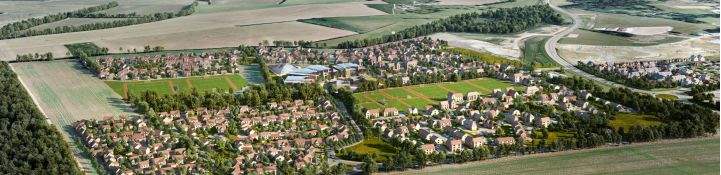
PROPERTY & DEVELOPMENT
New market for woodland carbon
Farmers and landowners in England can now plant trees to sequester carbon and help tackle climate change. The Woodland Carbon Guarantee Scheme gives successful land managers the option to sell their captured carbon dioxide in the form of verified carbon credits, called Woodland Carbon Units (WCUs), to the Government for a guaranteed price every five or 10 years up to 2055/56. The Government’s guaranteed price would be set by auction and helps to form the market; landowners are free to sell their credits privately too. Subject to certain exceptions, it is possible to combine scheme participation with other woodland grants. If you would like to discuss the scheme please contact Jamie Adamson.
Reservoir safety
An independent review of reservoir safety has been announced. It will look into the events that took place in Whaley Bridge, Derbyshire, this summer and consider what lessons can be learned by the wider industry to ensure ongoing reservoir safety.
Local heritage listing to be encouraged
A national campaign will encourage local people to nominate heritage buildings which are important to them and reflect their local area and identity. All local authorities will be challenged to draw up lists of buildings of significant historical and cultural value to an area, to ensure that they are protected and recognised in the planning system. To support the campaign £700,000 will be shared between 10 counties. Historic England will also launch a campaign on local identity to get the country talking about what defines our heritage. In addition, a local heritage champion will be appointed to spearhead the campaign and encourage councils to increase local listings.
Wales: Agricultural repairing obligations
On 1 November new model clauses were introduced for Wales which set out the repairing obligations for many Agricultural Holdings Act 1986 landlords and tenants. The change brings Wales back into broad alignment with England. If a liability has switched between the parties there is a window of a month in which arbitration over any issues about its condition is possible. For further information please contact Rhydian Scurlock-Jones.
Green ambitions for commercial lettings
By 2030 the Government’s preferred aim is for landlords of all non-domestic privately rented properties in England and Wales to ensure their properties achieve a minimum energy efficiency standard of Energy Performance Certificate (EPC) band B. Necessary energy efficiency investment which meets a seven-year payback test will need to be made. It is now consulting on its ambition and plans for improving non-domestic energy efficiency.
.jpg)
BUSINESS & ECONOMY
£1 billion to end mobile not-spots
The Government has struck a £1 billion deal with the mobile phone industry in an attempt to solve poor mobile coverage in rural areas. It aims to bring 4G coverage to 95% of the UK landmass by 2025, improving coverage for 280,000 homes and businesses and nearly 10,000 miles of roads. EE, O2, Three and Vodafone will invest £530 million in a Shared Rural Network using new and existing masts to tackle partial not-spots (areas with signal from one but not all operators). If they meet these ambitions for partial not-spots, Digital Secretary Nicky Morgan says the Government will commit up to £500 million to invest in bringing signal to total not-spots.
Export success for British tea
Cornish tea company Tregothnan has secured £145,000 of new export orders thanks to a government networking event at Number 10. Truro-based Tregothnan’s £95,000 US order has come from a leading hospitality business, increasing its sales to the country by 32% since it started exporting there in 2010. For its £50,000 Kazakhstan deal the company was tasked with creating a bespoke English tea. Tregothnan established the first ever British tea gardens in 1999 and has since developed a full range of single estate and blended teas.
OTHER RURAL NEWS
And finally…
Eagles run up roaming charges
Russian scientists ran out of money because some of the birds they were tracking flew to Iran and Pakistan. The SMS transmitters attached to the migratory eagles ran up huge data roaming charges after flying from southern Russia and Kazakhstan. One of the 13 tracked eagles, Min, managed to use the entire tracking budget by itself. After learning of the scientist’s dilemma, the operator offered to cancel the debt and put the project on a cheaper tariff. The team had already started crowdfunding in an attempt to pay off the bills; their “Top up the eagle’s mobile” campaign has raised more than £1,200.