
.jpg "The Savills Portfolio")
A new report focused on farming in the fens highlights the flood risk faced by some of our most valuable agricultural land and the important role food production plays in the local economy.
Agriculture will need to continue to evolve and develop in the face of such challenges. At Harper Adams news that the Hands Free Hectare is being scaled up into a 35 hectare Hands Free Farm is an exciting development in agri-tech and a significant step on the road towards commercialising the technology.
FOOD & FARMING
Farming in the Fens
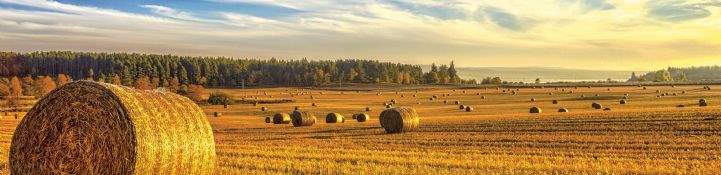
A new NFU report with a foreword by TV presenter and farmer Jimmy Doherty highlights how and what the Fens deliver for Britain. 90% of the Fens is grade one or two farmland which grows a third of England’s fresh vegetables and a fifth of our bulbs, flowers, potatoes and sugar beet. The food supply chain in the area employs almost 80,000 people and contributes nearly £3.1 billion to the economy.
NFU Vice President Stuart Roberts hopes the document will inform key decision makers and new policy, to help “secure a successful and sustainable future” for the area. Most of the 1,500 square miles covered by the Fens is below sea level, so the maintenance of flood defences is essential to protect the area’s 500,000 residents and 13,000 different species of animals and flowers which are found there. The NFU believes current flood defences are “inadequate” in the face of climate change. If the land is flooded by seawater it will become unproductive for at least five years. The Environment Agency has responded by saying it is an “unprecedented, complex problem” but “millions” is being invested in flood protection already. Defra has said it is providing £2.6 billion of capital funding over six years and £1 billion for flood defence maintenance.
Delivering Future Arable Performance - Visit us at Cereals
Savills will be launching its new report Delivering Future Arable Performance at next week’s Cereals Event. It focuses on the challenges faced by agriculture due to the planned withdrawal of direct payments and how farmers can take action now to prepare their businesses for the future. This includes the role which collaboration could play in cutting businesses’ costs and boosting their efficiency; why waiting for the new Environmental Land Management Scheme is not the right thing to do; and also highlights some of the opportunities created by plans to oblige developers to deliver a net environmental gain. Please join us at stand 335 on 2nd Avenue to learn more.
Hands Free Hectare grows into a farm
Harper Adams University, home of the Hands Free Hectare, has received funding from Innovate UK to create a 35 hectare Hands Free Farm. It will move the project beyond the feasibility stage, introducing irregular fields and the need to travel to them. The farm will grow three different combinable crops and adopt the Hands Free Hectare’s concept of using small tractors and combine harvesters in order to reduce soil compaction and improve precision applications. The three-year project will be run by Harper Adams and Precision Decisions along with a new partner, Australian precision agriculture specialist Farmscan AG.
Dairy: UK farmers machinery costs are double
AHDB’s Dairy Performance Results report compares the competitiveness of UK farmers with those in other countries. The UK is close to the top 10 in most sectors when overheads are calculated on a pence per litre (ppl) basis. However the expenditure of UK dairy farmers on machinery and contracting, at close to 5ppl, is more than double the average of the top 10 nations and there is a clear correlation between lower machinery costs and higher profits.
Re-register waste exemptions
Many waste exemptions will expire this autumn and farmers will need to apply to renew them. The Environment Agency introduced a new system in 2013 which provided exemptions for three year periods covering activities such as burning waste in the open, using rubble to maintain paths and roads, or using tyres on a silage clamp. Reminders should be issued by the EA a month in advance and renewal applications can be made online.
POLICY
GMO legislation overhaul in the EU
14 EU nations including the UK are calling for an update to laws affecting new plant breeding technologies. The coalition led by the Netherlands and Estonia is asking for a common EU approach on gene editing and for the working programme of the next European Commission to include a revision of current rules. The update has become necessary after the European Court of Justice (ECJ) said organisms obtained by mutagenesis should be considered GMOs and so are subject to the GMO Directive. EU agriculture commissioner Phil Hogan said the EU executive has already prepared the ground for a new initiative on gene editing.
Migration: Vets added to shortage occupation list
If a role is listed on the Shortage Occupation List, migration rules for workers from outside the European Economic Area are relaxed in order to help fill shortages in our labour market. A recent review has expanded the list to cover 9% of jobs in the labour market, up from 1%, and professions such as vets have been added. Agriculture was one of the most engaged sectors in the review by the Migration Advisory Committee. While most sectors blamed a lack of applicants with the required skills, agriculture was more likely to suggest Brexit uncertainty and reduced EU migration as being responsible for shortages. The review also acknowledged how seasonality requires a flexible workforce that is difficult to access from the domestic labour supply. It went on to say restricting access to flexible labour pools could pose a risk to the sustainability of some businesses. The review concluded it did not have enough evidence to judge whether agricultural management roles were facing shortages and if migration would be the solution.
ENVIRONMENT & NATURAL CAPITAL
Compassionate conservation is flawed
Scientists argue that not killing any animal is a “fatally flawed” conservation concept. Rather than focusing on individual animals, conservation should concentrate on wider habitats and whole species. The report says “Compassion need not preclude humanely killing an animal if that reduces the animal's suffering, enhances the survival of the species or its habitat, or safeguards human life or other more threatened species”. Professor Kartik Shanker from the Indian Institute of Science, co-author of the study, emphasised a “universal agreement that animal welfare is important”.
The issue is particularly contentious due to the controversy still surrounding General Licences. Scottish Natural Heritage (SNH) has recently announced it will bring forwards a consultation on General Licences which was initially scheduled for 2020. The 12 week consultation will now take place later this year. Robbie Kernahan, SNH’s Head of National Operations, said the decision had been made “in light of the complicated situation in England”. He added that SNH wanted to make sure General Licences are “clear, proportionate and fit-for-purpose”.
Pros and cons of predators
Derek Gow, an expert in mammal reintroductions, is building a wildcat breeding complex in Devon and hopes to release them into the wild in three years’ time. The species became extinct in the wild 150 years ago. Mr Gow says “if you lose predators from an ecosystem you create imbalance”. He expects the cats will help to reduce the number of grey squirrels, a non-native species affecting populations of the native red squirrel. A spokesperson for the NFU said other potential effects of reintroducing the species should be fully understood first.
A growing sea eagle population in Scotland is one example of where reintroduced predators are causing problems. Since their reintroduction in the 1970s, there are now 130 breeding pairs in Scotland and 500 are predicted by 2040. Farmers and conservationists hope to stop the UK’s largest bird of prey from taking and killing lambs. Distraction food and helium balloons are currently being trialled as counter-measures to reduce the loss of livestock. SNH hopes to develop a “toolbox” of techniques; “The best chance we've got of doing that is working together” said SNH's Rae McKenzie, who is supervising the project.
Report caterpillar sightings
People in London and South East England should report sightings of Oak Processionary Moth caterpillars which could be damaging oak trees in their area. Nests are typically dome or teardrop-shaped and white when fresh, but soon become discoloured and brown. The caterpillars have black heads and bodies covered in long white hairs which can cause irritation and breathing difficulties in extreme cases, so should not be touched. They feed on oak leaves, making the trees more vulnerable to other pests, disease and drought. Any sightings should be reported to the Forestry Commission via its Tree Alert online form. If you would like to discuss this issue further please contact Mark Townsend.
PROPERTY & DEVELOPMENT
Rural digital services inquiry launched
A Government inquiry will examine current proposals and delivery of digital connectivity to rural areas. The Environment, Food and Rural Affairs Committee last conducted an inquiry in 2015 and is revisiting the topic because “digital connectivity still remains a core issue for many rural communities”. Neil Parish, Chair of the Committee, said “the Government and service providers need to ensure that equal access to a high-quality, cost-effective service is accessible to all”. Evidence can be submitted until Monday 24th June.
Permitted development rights change
Homeowners in England will be able to build larger extensions without planning permission. Temporary rules permitting bigger single-storey rear extensions are being made permanent. Additions to terraced and semi-detached homes can be up to six metres long, while detached houses will be able to add structures up to eight metres long. These limits are double those previously allowed by permitted development rights. 110,000 households have taken advantage of the temporary rules since 2013.
.jpg)
BUSINESS & ECONOMY
Dairy will suffer from trade war
The US Trade Representative announced in April that it was considering additional tariffs on European products valued at approximately $21 billion. The measures would affect 317 tariff codes, 44 of them relating to dairy product trade, with a value of $1 billion. Although EU exports to the US account for only a small percentage of European dairy output and US supply, a new report from Rabobank says a trade war will create winners and losers. Specialist cheese producers from non-EU countries would be amongst the winners, while Ireland is likely to be the biggest loser with 34,500 tonnes of annual dairy exports at risk. Rabobank has said the EU cannot afford to lose the US market for more than 100,000 tonnes of cheese exports, especially because a hard Brexit could affect access to the UK’s 400,000 tonne cheese market.
Farming is a family business
Businesses owned by multiple generations of the same family are most common in agriculture. 72% are owned by the same family for more than one generation and 20% for four or more. The next largest proportions of multi-generational family businesses are manufacturing (32%) and real estate 30%. The report by the Institute for Family Business (IFB) says 96% of private sector firms in the agricultural sector were family owned in 2017. Part of the reason for being so high was attributed to a desire to pass land through the generations. Of all the family owned firms in the UK, 3.2% are in the agriculture sector.
Saudi sovereign fund invests in UK agriculture
Saudi Arabia’s agriculture investment company, Salic, has led a £7 million funding round for a British agri-tech company. Hummingbird Technologies uses drones, AI and satellite imagery to map land and produce in-depth analysis of crops. Will Wells, Hummingbird chief executive, said the investment would fund recruitment and international expansion. Salic has hired Hummingbird to oversee 400,000 hectares of farmland it owns in Australia and the Ukraine. The agreement follows last year’s talks between Prime Minister Theresa May and Crown Prince Mohammed bin Salman when an ambition to build £65 billion of mutual trade and investment opportunities was announced.
OTHER RURAL NEWS
From fast cars to farming
Jeremy Clarkson will switch Ferraris for Fergusons in his latest TV outing in September. The Grand Tour host is keen to draw attention to future food shortages and soil depletion. He is so concerned that he has modified his own diet, saying he has switched to chicken but says “that’s just a vegetable with a head”. The show will look at how farmers must balance increasing food production with environmental concerns. It will also catalogue Mr Clarkson’s own experiences of farming and hopes to portray farming in a more realistic light than the public may be used to. He says “Every decision you make as a farmer is bad for some reason or another.”, “This is not Kate Humble… This is actual farming: life, death and form filling”.
And finally…
The sound of Moo-sic
A village mayor in South West France wants the sound of cows, cockerels and church bells to be issued with heritage site protection. Bruno Dionis du Séjour, the mayor of Gajac, has appealed to the Ministry of Culture to make the sounds of rural France an intangible cultural asset. A French MP has since taken up the request and will table a Bill at the National Assembly. The request has a rather more serious undertone however. The mayor is concerned by “an accumulation of complaints from people who decide to settle in rural areas” about the iconic noises. If the Bill is passed, numerous legal cases would be scuppered. Du Séjour said “it will be a guarantee for a farmer not to find himself in front of the judges because his cows moo too much”.