

We are now halfway through the agricultural transition period in England and, as per the plan, basic payments are being progressively removed and environmentally focussed payments are being introduced.
This is alongside efforts to boost farm productivity to help improve their viability without direct support. The latest round of the Improving Farm Productivity grant has just opened and now funds solar PV installations alongside automation technology.
Developers and landowners can now progress Biodiversity Net Gain (BNG) projects and credit purchases with more certainty as the government has announced the requirement’s new implementation date in England. Whilst in Scotland there is a proposal to amend the process for residential rent adjudication as a temporary measure once the rent cap is lifted.

FOOD & FARMING
Apply for an Improving Farm Productivity grant
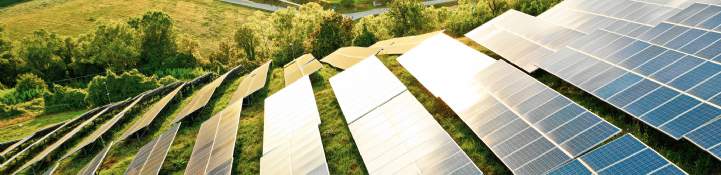
The second round of the Improving Farm Productivity grant is open for applications. The grant will now cover half the cost of certain robotic and automated equipment, increased from 40% in the last round. This year the scheme is also offering funding at a 25% rate for the installation of solar photovoltaic (PV) systems on farm building rooftops and over irrigation reservoirs.
The grant is part of the Farming Investment Fund and is open to farmers, growers and related contractors. For robotic and automated equipment, the minimum grant available is £25,000 and the maximum grant available is £500,000. For solar equipment, the minimum grant available is £15,000 and the maximum grant available is £100,000.
Applicants can apply for robotics and solar equipment but the combined grant amount cannot exceed £500,000. There is a two-step application process. Applicants must first go through the online checker before 21 March 2024. Those invited to make a full application then have until 30 June 2025 to do so. Please contact Georgina Sweeting for more information.
A step change in farmland supply
There was a step change in the overall supply of farmland onto the public market in Great Britain last year; 20% more land was offered than in 2022. The additional farmland marketed is largely attributed to farm business changes driven by the agricultural transition. A marked rise in farm machinery dispersal sales suggests more farmers are exiting the industry or restructuring their businesses. The Spotlight on the Farmland Market from Savills Research also suggests the rate of growth in farmland values will slow from 2024 due to weaker demand coinciding with increasing supply.
The Spotlight also explores what Great Britain’s major political parties are likely to be including in their manifestos for the upcoming general election and how those pledges might affect land values. Analysis suggests planning reform and more ambitious environmental goals and targets will feature strongly. For more information, contact Alex Lawson.
Co-op incentivises sustainable beef
The Co-op will financially reward farmers in its beef supply chain for sustainable farming practices. The Beef Sustainability Pilot is a two-year pilot that will provide selected farmers with access to a bespoke emission reduction plan. They will also receive a sustainability dividend linked to the emissions reductions achieved throughout the programme.
Farm assurance schemes to be reviewed
The NFU and AHDB have set out plans for a back-to-basics review of all farm assurance schemes. This follows the controversy over the development of Red Tractor's 'bolt-on' voluntary environmental module known as the Greener Farms Commitment. That module is currently on hold following criticism from farmers who feared it would become compulsory and undermine the value of farmers' natural capital and sustainability improvement efforts.
The review will seek to assess how farm assurance can deliver value back to scheme members. It will also investigate how members are consulted during the development of new standards and how technology is used for assurance purposes. While the Red Tractor scheme will be assessed as part of the process, the two organisations are keen to stress the review is broader and covers all aspects of farm assurance.

POLICY
BNG goes live in February
When the Environment Act 2021 was passed, the government pledged that BNG would become mandatory for large development projects in November 2023. After a few months of delay, the commencement date for the planning process to enforce mandatory BNG requirements has been announced as 12 February 2024. To put BNG into legal force, four statutory instruments have been laid in Parliament - together they mean BNG will become and remain law unless either house rejects them within 40 sitting days.
Public right-of-way blockages increase
According to a BBC study using data from 73 local authorities, public rights of way are blocked in nearly 32,000 places across England and Wales, close to 4,000 more than reported in 2022. Councils have a statutory right to ensure access is maintained, however many are blaming a lack of funding for their inability to keep footpaths clear of obstructions and to maintain features such as kissing gates or stiles.

ENVIRONMENT & NATURAL CAPITAL
Is the government on track with environmental targets?
The Office for Environmental Protection (OEP), which holds the government to account on its environmental policies in England has issued a damming assessment of the rate of progress towards achieving the goals of the 25-Year Environment Plan (25YEP). The annual report looked at trends and targets within the 25YEP and its 2023 Environmental Improvement Plan (EIP) update. It found that of 40 environmental targets assessed, the government is only on track to achieve four, with 11 partially on track and another 10 largely off track.
Data availability remains a major issue for monitoring progress - a further 15 targets could not be assessed due to a lack of sufficient evidence. The report concluded that of the 10 headline goals in the EIP, the government is off track on seven, only partially on track on two, and the last could not be assessed due to lack of data. Although the EIP is a welcome commitment, the OEP’s annual report concluded that progress is being impeded by the absence of key policies, such as the long-promised UK Chemicals Strategy and Land Use Framework, and failure to tackle all major pressures when creating policies, such as a focus on sewer outflows without addressing diffuse pollution. A lack of urgency was also criticised.
Solutions are proposed to get the government back on track, such as integrating meaningful delivery plans within the EIP plus a series of recommendations that the government must respond to within 12 months. The government recently rushed out its response to the OEP’s 2023 report just days before the previous 12-month deadline was due to expire.
Improving carbon calculators
A research project commissioned by Defra has assessed the outputs of six popular farm carbon footprinting tools across 20 different model farms to investigate the reasons for variability in their results and recommend how the tools could be made more useful for farmers. The six tools were selected due to their common usage and suitability for use by farmers as ‘non-experts’.
A high degree of difference was found among the tool's carbon calculations. For the two poultry farm models assessed, some tools gave an emissions output more than 350% higher than the lowest. Across all the models and tools, the greatest divergence was seen for farms with organic soils, farms where high levels of soya feed use was assumed, and for the lowland grazing livestock models. Results for the dairy models were most consistent across all the calculators. The study found that no single calculator gave consistently higher or lower emissions when looking across all of the different production systems tested. However, inconsistency was greatest for the calculations of carbon reductions and removals.
The project aimed to provide insights that would help harmonise carbon accounting tools for agriculture, it did not recommend the development of a single industry-wide calculator but instead principles that can be used to evolve existing calculators to improve their consistency and confidence in them. Calculator designers are encouraged to rely on the latest standards and protocols to give a full representation of the farm’s activities and on increasing functionality to allow more precise data to be used for the largest sources of emissions such as enteric methane (from digestion in the gut). The industry needs to come to an agreement with the government on why farm-level assessments should be preferred to product-level assessments so that better guidance on what should and shouldn’t be included can be created. The industry also needs to work with the government to develop an agreed set of robust emissions factors and to quantify carbon removals to a standard which can support carbon removal claims. Despite all this, the report emphasised that all the calculators can provide farmers with a baseline understanding of emissions and can be relied on to help farmers start the decarbonisation process.
Fewer properties to be protected from floods
More than 200,000 English homes are at an increased risk of flooding. The government committed to improve protection for 336,000 properties between 2021 and 2027, outlining a £5.2 billion capital programme. The Environment Agency (EA) underspent by £310 million in the first two years, meaning only 75% of the 2,000 flood defence projects originally planned will be funded.
A new Public Accounts Committee (PAC) report blames a £34 million shortfall in EA funding between 2022 and 2023. Due to the shortfall, the EA could only keep 94% of its assets at the required condition against its target of 98%. At the same time, not enough new defences are being built. The report says poor maintenance is undermining progress on the capital programme. It adds that Defra has not yet got the balance right between building new defences and maintaining existing ones. The PAC highlighted that rural communities, in particular, are being left more vulnerable due to a lack of flood protection provision for communities of fewer than 100 houses.
Separately a study has calculated that coastal flooding because of climate change could cost the EU and UK up to £748.9 billion by the end of the century. East Yorkshire and north Lincolnshire would suffer the most in the UK because of damage to transport infrastructure. Low-lying regions such as Veneto and Emilia-Romagna in Italy and Zachodniopomorskie in Poland could see up to a 21% loss in gross domestic product. The study by economists from Delft University of Technology considered the worst-case scenario of a 5°C increase in average global temperatures causing a 1.5 metre rise in sea levels. While this is considered unlikely, the Earth is still on track for around 3°C of warming and the study did not consider the consequences of tipping point events which would cause the Arctic sea ice or the Greenland ice sheets to melt uncontrollably.

PROPERTY & DEVELOPMENT
Scotland: rent protection
From 1 April onwards, subject to parliamentary approval, the process for rent adjudication will be temporarily modified for one year. Any tenant who wishes to dispute a rent increase notice can apply for rent adjudication. In such cases, Rent Service Scotland or the First-tier Tribunal will set a rent based on the lowest of the following three figures:
- The open market rate
- The rent requested by the landlord
- A comparator based on the difference between the market rate and current rent
These changes are being made because the temporary rent cap and eviction moratorium protections introduced by the Cost of Living (Tenant Protection) Act 2022 will no longer apply from 1 April 2024. This final date is built into the legislation and cannot be extended further.
BUSINESS & economy
Is our UK food supply chain broken?
A report launched at the Oxford Farming Conference called “Is the UK Food Supply Chain Broken?” argues that the risk of the food supply chain currently sits with farmers and growers while the reward sits elsewhere. To address this the document calls for several improvements, including a better understanding of the cost of production and better government policy.
It also highlighted the UK’s unique reliance on long-term fixed-price contracts which can, at times, straddle multiple seasons. The report does not necessarily criticise this model, saying it can work well but becomes difficult to manage during periods of volatility. In Europe, the pricing is more likely to be weekly or monthly, as it used to be in the UK, giving the market the ability to react. The impact of inexperienced supermarket buyers on their suppliers was also regularly highlighted in the interviews that informed the document, as was the burden of audits focussing on ESG issues in the sector.
Canada trade negotiations halted
The UK has stopped its trade talks with Canada which has been pushing for the UK to relax a ban on hormone-treated beef. Canada's government had also been facing pressure from domestic cheese producers. Trade currently takes place under a deal the UK rolled over from its time as an EU member. A time-limited agreement allowed the UK to sell cars and cheese to Canada with lower import taxes. Talks around extending those privileges as part of a new deal have been taking place since March 2022 but have now broken down. Higher tariffs are already being charged on cheese, whereas the higher tariffs for cars will kick in from April 2024. Total trade between the two nations was worth £19.2 billion in 2020, with UK imports from Canada worth £7.3 billion and UK exports to Canada worth £11.8 billion.

OTHER RURAL NEWS
And finally… Causing a stir
Boil water in a kettle. Pour it over a teabag. Add the milk last. Making a cuppa, a brew or a cup of Rosie Lee is a quintessential part of British culture, so much so that an American professor’s suggestion to change that simple process verged on causing an international incident. Michelle Francl, a professor of chemistry at Bryn Mawr College in Pennsylvania, suggests adding a pinch of salt to the cup to counteract some of the bitter taste. Her advice, published in a book called “Steeped: The Chemistry of Tea”, also suggests warming the milk and adding a squeeze of lemon to remove the “scum” that sometimes appears on the surface of the drink. Following the suggestions, the U.S. Embassy stepped in to shore up Anglo-American relations, stating on X “we want to ensure the good people of the UK that the unthinkable notion of adding salt to Britain's national drink is not official United States policy. And never will be”. They went on to say “The U.S. Embassy will continue to make tea in the proper way – by microwaving it”. Whether the Special Relationship will survive such strain remains to be seen.
If you have queries regarding any of the articles, please get in touch with us.