
The opportunity to apply for Countryside Stewardship funding is now open in England.
For longer-term management the Government has published proposals to allow the legal creation of conservation covenants, perpetual commitments to manage land in a defined environmentally beneficial way. These could open up new ways for conservation bodies to work with landowners, for landowners to be paid for public goods and for developers to secure the environmental offsets they need to progress their development plans. Returning to Brexit, Defra Secretary Michael Gove has reassured farmers that the Government would use tariffs to protect some sectors in the event of a no-deal departure..
FOOD & Farming
Countryside Stewardship 2019 opens
Landowners can now apply to the Countryside Stewardship scheme for 2019. Historical uptake has typically been poor but Farming Minister George Eustice has said the application process is now more accessible. He went on to say Countryside Stewardship is “an important first step” in the Government’s move towards more sustainable food production and public money for public goods. Mr Eustice also promised all agreements are guaranteed for their full lifetime. Application packs must be requested by 31 March or 31 May depending upon the agreement type. If you would like to discuss stewardship options for your farm, please contact Jon Dearsley.
The Future of Food released
The NFU has published its Future of Food 2040 report, which explores how Britain’s future evolution will affect farming. The report looks at changing social trends, innovative technology, implications for British farmers and how they can exploit these new markets. Head of NFU policy services, Dr Andrea Graham said, “farming is a progressive industry which is always looking ahead for new opportunities and developments, and over the next 20 years we will face potentially seismic changes in all aspects of society.” She concluded, “there are many possibilities for the future of farming, but one thing is certain; food is a fundamental part of life”.
Boohoo ewe-turn on wool
Online fashion retailer Boohoo has gone back on its decision to ban wool just hours after announcing the ban. The label said it would “not knowingly source any wool products” for any of its labels, Boohoo, BoohooMan, Pretty Little Thing and Nasty Gal. People for the Ethical Treatment of Animals (PETA) praised that initial decision which was then overturned the next day. Boohoo tweeted to say it would “continue to use wool as a sustainable material” and was talking to PETA about “options that help us towards a more sustainable future”. A representative from the National Sheep Association said, “wool is not a cruelly sourced product” and “in the vast majority of cases sheep are handled with care when being shorn, and are shorn for health and comfort reasons”.
Reducing sugar consumption post-Brexit
The UK needs to reduce its sugar consumption by two thirds to meet dietary recommendations. A report by the Centre for Food Policy has said limiting supply would increase prices and accelerate the reduction of sugar consumption. Five options could be used to reduce supply; marketing quotas, minimum prices, excise taxes, subsidy reform, and regulation of both the product composition and its labelling. Graham MacGregor, chairman of Action on Sugar, said, “it’s imperative that a joined-up sugar policy with consistent strategies for the UK is in place” and added “teenagers and children in the UK are among the unhealthiest in the Western world”. Paul Kenward, managing director of British Sugar, responded by saying “we do not believe that trade and agricultural policies are the right mechanisms to address public health outcomes” and that while sugar consumption in the UK is falling, obesity is not.
Dairy Crest to be bought by Canadian firm
Cheese and butter producer Dairy Crest is to be bought by Canadian company Saputo in a £975 million deal. The company has said that nearly all of its 1,100 UK jobs are safe. The purchase represents the first UK acquisition by Saputo, which has over 15,000 employees across 62 manufacturing sites in Canada, USA, Argentina and Australia.
Criticism of non-stun slaughter
The British Veterinary Association (BVA), supported by the RSPCA, recently addressed an open letter to Defra Secretary Michael Gove demanding, “all animals should be stunned before slaughter. No exceptions”. The letter noted that the results of its survey into slaughter methods had not yet been released. The Food Standards Agency has now issued the results which reveal more than 94 million animals were slaughtered without being stunned in 2018, including a quarter of all sheep meat exported from the UK. Non-stun slaughter is only permitted for religious purposes, a measure intended for domestic consumption only. It is believed over 90,000 animals slaughtered for kosher certified meat were rejected as being ‘unfit for religious consumption’. Dr. Marc Cooper, head of farm animals at the RSPCA said, “we are concerned that this meat could be entering the conventional market unlabelled”. The report said it is unclear if this meat is sent for wider consumption.
POLICY
Gove: UK will apply food tariffs to protect farmers
In the case of a no-deal Brexit, the UK will impose tariffs on food imports Defra Secretary Michael Gove has reassured farmers. He told the NFU annual conference that tariffs would be necessary to “protect valuable domestic production”. A new tariff regime including “specific and robust protections for farming” is expected soon. Theresa May is reportedly bracing for “howls of rage” from other sectors when tariffs are finalised by ministers. Mr Gove hinted that there would be tariff protection for beef and particularly lamb but would not confirm the position for cereal production.
Mr Gove’s comments followed a speech by NFU president Minette Batters who said exports leaving the UK ports next week might not be accepted at their destination markets. “In a no-deal scenario, we will fail to roll over many of the trade deals the EU currently has with third countries,” she said, then adding “no-deal isn’t just no-deal with the EU but with many other countries too”. Gove later echoed these concerns, pointing out that “Australia and New Zealand have tariff-free access to EU markets for a certain amount of sheep meat. If we lose our EU market share, it would be extremely difficult to restore it”.
Scotland: Making rural policy mainstream
The new Rural Economy Action Group has been tasked with bringing the rural economy into the mainstream of Scottish politics. It will act on recommendations from a report by the National Council of Rural Advisors (NCRA). These recommendations included ensuring national economic planning and industrial strategy incorporates rural considerations. Fergus Ewing, the Rural Economy Secretary, said, “there has never been a more important time to ensure that our rural economy is mainstreamed”.
Scottish inheritance law reform considered
Scottish ministers are considering reforming inheritance regulations to reflect changes in society. The modern make up of families, with fewer marriages and more stepchildren, is one issue that is “vastly different today than it was when these laws were passed” according to Community Safety Minister Ash Denham. 2011 census data shows 16% of families in Scotland were cohabiting couples and 29% of those were step families. The consultation is open until 10 May.
ENVIRONMENT & NATURAL CAPITAL
Securing environmental commitments: Conservation covenants
Where landowners wish to make positive environmental commitments there are not currently any adequate mechanisms to legally secure these benefits over the long term. In England, conservation covenants could provide a new legal tool to make this possible because they would bind present and future owners. The Government is now consulting on plans, which it has developed from proposals made by the Law Commission in 2014. There are a number of potential applications including, altruistic uses where a landowner ensures their good management is continued by future generations or owners, securing heritage sites, an alternative to land purchase by conservation organisations and to allow conservation organisations to dispose of land without its environmental delivery becoming diminished. The concept has become increasingly relevant now that agricultural support is transitioning towards the delivery of environmental public goods being the main priority. They could be used as a structure for payment for ecosystem services schemes and to secure net gains for biodiversity from developers, by locking down permanent land-management obligations for areas of offsetting habitat. The National Trust has described conservation covenants as a powerful tool for helping achieve the 25 Year Environment Plan’s goals. The consultation has been welcomed by the CLA and RSPB; it will run until 22 March.
Lab grown meat harms planet
Scientists think lab grown meat could do more damage to the environment than cattle production. Beef is under increasing pressure from environmentalists because it is seen as an emissions intensive food which produces carbon dioxide, methane and nitrous oxides. Cultured meat mainly emits carbon dioxide due to the energy needed in the production process. Modelling shows that whilst the global warming impact of cultured meat is lower in the short term, it does overtake cattle production in the long term in some scenarios. The report published in Frontiers in Sustainable Food Production concludes that cultured meat should not automatically be considered superior to cattle, but it does not consider other protein sources.
Fracking regulations need shaking up
Nearly 50 scientists have urged the Government to “commission an expert review of the present traffic-light system threshold levels” that regulate fracking activities. Present regulations mean fracking operations are stopped by any seismic events measuring more than 0.5 in magnitude on the Richter scale. The academics say, “this is very far below levels set in other countries, or for comparable industries in the UK” like quarrying or mining. The letter comes after Britain’s richest person and founder of petrochemical company Ineos, Jim Ratcliffe, called the regulations “absurd” and “unworkable” and warned that the UK was “heading towards an energy crisis”.
Cuadrilla has said current restrictions mean commercial fracking is not sustainable and have prevented it fracking 95% of its gas well near Blackpool. Some have suggested raising the level to magnitude 1.5 would be safe. The Government refuses to budge on the issue however and will not be conducting a review even though the UK energy minister, Claire Perry, previously said the system was “set at an explicitly cautious level” and “the trigger levels can be adjusted upwards”.
Renewable energy will dominate by 2040
Renewable energy sources will be the main source of the world’s power within 20 years according to the BP Energy Outlook report. The UK-based oil company claims renewables have gained a foothold faster than any other fuel in history and are growing at an unparalleled rate. Growth is expected to continue at 7% per year due to falling costs, technological advancement and government initiatives. However, oil demand will not peak until the 2030s and hydrocarbons will retain a major role until 2040. This does not paint a good picture for cutting emissions, which are instead predicted to rise by 10% by 2040.
PROPERTY & DEVELOPMENT
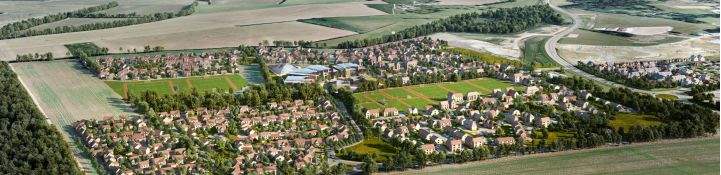
New homes planned across England
Almost £250 million of deals have been agreed by the Government to deliver 25,000 homes. 10,000 of those will be built on Ministry of Defence land under the accelerated construction scheme with Homes England. £157 million will go towards housing infrastructure like roads and greenspaces in Cumbria and Devon. 1,500 homes have also been earmarked for the Queen Elizabeth Olympic Park in London, supported by a £78 million loan. Housing Secretary James Brokenshire said “we must keep upping our game” and that the loans are “making the housing market work”.
Separate plans for public sector land hope to create 10,000 new homes, 14,000 new jobs and save £37 million in running costs by 2025. £15 million will be spent across over 100 public-sector sites to encourage new projects. The One Public Estate was launched in 2013 and has so far allowed the development of 3,336 homes. Housing Minister Kit Malthouse has said the programme will help “more people find a home of their own, but also help create jobs and save taxpayers’ money”.
.jpg)
BUSINESS & ECONOMY
Sainsbury’s-Asda merger in question
A merger between Asda and Sainsbury’s has been dealt a potentially lethal blow by the Competition and Markets Authority (CMA). The CMA inquiry group says it has found “very significant competition concerns in a number of areas” and resolving those concerns would likely be “complex and quite challenging”. Sainsbury’s chief executive Mike Coupe described the assessment as “fundamentally flawed” and suffering from “inaccuracy and a lack of objectivity”. Suppliers are “relieved that the merger looks dead in the water” although they have said, “the report was unable to reflect the impact the merger could have on businesses in the food supply chain”. CMA findings focused on consumer impacts despite some suppliers believing the merger could have been worse than a no-deal Brexit.
Businesses may go bust
Almost one-in-eight food and drinks businesses believe they may go bust in the event of a no deal Brexit according to a survey by the Food and Drink Federation. A further 46% believe crashing out of Europe would be a “very serious challenge” and likely result in redundancies. While three-in-ten said they had done everything they could to prepare, they remained unsure about their supply chain. A further one-in-ten said they simply did not have the resources to prepare for no-deal at all. Ian Wright, chief executive of the FDF, said the Government “seems determined to move us ever closer to the cliff edge”.
OTHER RURAL NEWS
Bavaria’s battles for bees
Bavaria’s Save the Bees campaign has brought about significant changes to the state’s farming practices. The group obtained signatures from 10% of eligible voters in the German state and well before the deadline. Representatives will meet politicians to discuss the next steps and with the backing of more than a million people, it is unlikely they will be ignored. The campaign has demanded that 20% of land is made bee friendly within the next 6 years and 30% by 2030, as well as more education on the issue. The campaign has drawn some criticism and Walter Heidl, chair of the Bavarian Farmers’ Association said, “we are already doing a lot, but often this is dismissed”.
And finally… Tinder for cows
Hectare Agritech has released a dating app for cows and bulls. Tudder hopes to “play the role of moo-pid” and help farmers match their cattle for breeding. Swiping right takes the farmers to SellMyLivestock, another app by Hectare, where there is more data to decide if their choice is really ‘the one’. Doug Bairner, CEO of Hectare, says “ewe-Harmony” could also be on the cards to help bring sheep together.