

On a mission to “unlock growth”, the Chancellor of the Exchequer has promised an end to “consultation culture” in England, arguing that “the role of government is to act”.
However, plenty of consultations are still underway, including some outside his remit, such as proposals on food price controls and compulsory purchase reform in Scotland. Even so, the rural sector is now moving from discussion to delivery on several important fronts.
The second SFI26 application window is expected to open on 22 September, with funding likely to be in high demand. In Scotland, Awaab’s Law comes into force on 6 October, and the government has now issued guidance for landlords. In England, the national registration service for private landlords and rented properties will begin its rollout in the West Midlands on 15 December.
FOOD & FARMING
Scotland: will there be a cap on food prices?
Scotland could become the first part of the UK to impose statutory price controls on everyday groceries. On 1 September, the Scottish Government opened a consultation on capping the price of a basket of 20–50 essential items, including bread, milk, eggs, cheese and rice, as First Minister John Swinney pressed ahead with a flagship manifesto pledge despite fierce industry opposition. The legal duty would apply only to large grocery retailers (more than 250 employees, more than £250 million in turnover, of which more than half must come from groceries, equating to around 1,490 sites), each of which would have to offer at least one line in every capped category at or below a price set by ministers. The consultation runs until 24 November 2026. Ministers insist farmers and crofters will be shielded, but the Scottish Government’s own impact assessment admits retailers could claw back lost margin by squeezing the supply chain. The promised safeguards amount to little more than a duty to “have regard to” producers.
Bluetongue rules eased for some
The Scottish Government has eased bluetongue movement restrictions for parts of the south-west, following consultation with the livestock industry. From 10 September, store, fattening and non-pregnant female animals no longer need to be vaccinated or PCR-tested to move out of the affected zone into Scotland’s disease-free area. Some breeding animals, including breeding bulls and pregnant cows, must still be vaccinated and tested before moving unless exempt through qualifying Bultavo-3 vaccination. The change reflects the lower risk of midge-borne transmission expected over the colder months.
At the same time, the area’s disease-control designation is being tightened. Because evidence now shows BTV-3 is circulating locally, the Temporary Control Zone in Dumfries and Galloway will be replaced by a Restricted Zone from the same date, bringing Scotland into line with England and Wales. Scotland had confirmed 21 cases by early September. Agriculture Minister Jim Fairlie warned the disease is “not going away” and urged keepers to review vaccination plans, calling vaccination “the only viable long-term strategy” as cases may emerge in new areas next season.
New Environment Secretary backs Farming Roadmap
Environment Secretary Angela Eagle used the National Farmers’ Union’s Back British Farming Day reception to give her “full-throated support” to the Farming Roadmap 2050 and describe farming as integral to national security. Acknowledging rising input costs, drought and disease pressures, she said farming must provide a viable return for those producing the nation’s food. Angela Eagle confirmed the government’s Farming Improvement Partnership Board (also referred to as the Farming and Food Partnership Board) will begin with a growth plan for horticulture, with poultry and other sectors to follow, while reiterating support for nature-based measures that improve agricultural resilience.
Defra has not engaged enough on food security
Britain is not ready for a serious shock to its food supply, the National Audit Office (NAO) has warned. Food is one of 13 Critical National Infrastructure sectors, yet more than a third is imported, and most of that comes through just four ports. The watchdog found that although the system held up through Covid and the Ukraine war, Defra is now “less confident” the private sector could cope with future shocks from extreme weather, disease or cyber-attack without government intervention. It credited Defra with taking some steps to prepare but concluded these have not gone far enough and criticised it for failing to involve businesses, communities and local government in emergency planning. Food businesses said the NAO engagement had tailed off since the pandemic, leaving them with little input into Defra’s plans for reacting to disruption, which the watchdog warned could mean officials draw up proposals that aren’t workable. The last national exercise to test a severe food shock, conducted in 2023, “found limitations in [Defra’s] preparedness”.

POLICY
Capital Grants and SFI26
Capital Grants 2026 has officially closed. The scheme shut on 1 September; its £225 million budget, a 50% increase from 2025, was fully committed within weeks. Around 17,000 applications came in, roughly 9,500 from first-time applicants and a third from farms under 50 hectares. Offers are now being issued in order of submission and will continue throughout the year; applicants should get supporting evidence to the Rural Payments Agency ASAP to avoid hold-ups (it was requested within 10 working days of the application’s submission).
SFI26 Window 2 is expected to open on 22 September. This round is open to all eligible farmers and land managers in England, a significant widening from Window 1, which closed on 28 August and was restricted to smaller farms and those without an existing agreement. A £50 million drought top-up takes the budget to around £230 million, and demand is expected to be strong. Delinked payments are all but gone. For more information on SFI26, see our briefing note or contact our Food and Farming team.
Call for evidence on gamebird shooting
Defra opened a call for evidence on 4 September on the rearing, release and shooting of gamebirds in England, seeking views on the impacts on biodiversity, protected sites, biosecurity and disease, bird-of-prey crime, animal welfare and the use of natural resources. It flags that the same welfare rules do not cover gamebirds reared for shooting as poultry farmed for food. Ministers stress that no decisions have been taken and that any future proposals would follow full public consultation; independent external reviewers will assess evidence on release and shooting, and Defra has separately commissioned an assessment of the sector’s economic value. The exercise applies to England only (the policy is devolved) and closes on 1 November 2026.
Shooting organisations have mobilised hard. BASC has called it “a fight for the future of shooting” and is urging every shoot, gamekeeper and rural business to submit evidence, while the Countryside Alliance branded it an “unnecessary and unjustified attack,” noting the government set out its ambitions for the sector in the Land Use Framework and Animal Welfare Strategy before gathering the evidence. With shooting worth around £3.3 billion a year and supporting close to 150,000 jobs, estates with sporting interests should take the opportunity to put their conservation and economic contribution on the record.
Healey will not respond to speculation
Chancellor John Healey delivered his first major speech in Coventry on 7 September. He focused on growth and repeatedly declined to be drawn on tax, telling reporters, “If I respond to speculation now, that will only fuel more speculation”. He reaffirmed the manifesto commitment not to raise the rates of income tax, VAT, corporation tax or National Insurance, while stressing “fiscal discipline” remained his “first priority”. With the Resolution Foundation estimating his headroom against the fiscal rules has shrunk from £24 billion to around £5 billion, speculation has centred on capital gains, property and inheritance taxes - the levers of most direct concern to landowners.
On development, John Healey vowed to “Take an axe to the thicket of consultation, litigation and administration that has a stranglehold too often on private investment,” pledging to extend judicial review reforms from energy projects to all major infrastructure, “So that vexatious litigation cannot block economic growth”. The government cited an average 18-month delay from legal challenges to nationally significant projects.
The end of “consultation culture”
The word consultation appeared four times in the last issue of Landscope, but if the government is true to its word, that should drop. In his growth speech, John Healey said: “The people who elected us as a government expect us to get on with it. The role of government is to act.” He then went on to confirm that “consultation culture” will end across the government and that the Attorney General has issued new guidance to make it clear that minimising legal risk shouldn’t be the be-all and end-all of ministerial decisions. Ministers have been told public consultations are not always required, and their departments are being encouraged to find other ways to get views from the public and experts when developing policies. Existing commitments to hold consultations also do not need to be honoured.
By taking this action, the government is aiming to reduce delays. There are certainly many examples where severely delayed responses to consultations and successive consultations have created confusion and prevented action. Residential energy efficiency is a good example for the rural sector. But the reforms to Agricultural Property Relief (APR) and Business Property Relief (BPR) show the risk of moving too far the other way, with major policy changes developed without proper consultation or input from those who understand the practical consequences. Time will tell how far the government changes its approach. In the meantime, anyone looking for more clarity on residential energy efficiency should look out for our upcoming Spotlight on Future-proofing rural homes.

ENVIRONMENT & NATURAL CAPITAL
Scotland to create “single national environmental body”
First Minister John Swinney used the Programme for Government 2026–31, published on 1 September, to confirm that the Scottish Environment Protection Agency, NatureScot and Zero Waste Scotland, with Scottish Forestry potentially to follow, will be merged into a single national environmental body, part of what he called “the most radical reshaping of public services since the establishment of the Scottish Parliament.” Delivered through the Public Service Renewal (Scotland) Bill, the new body is intended to combine the functions of each organisation, “remove unnecessary barriers” and make environmental interventions “more impactful,” with consultation expected this autumn and the body ready for service by 2029.
EA targets farmers without permits
The Environment Agency (EA) has been investigating farmers who spread waste gypsum on land without the required environmental permit or registered exemption, with reports of criminal investigations in Lincolnshire. The EA’s regulatory position statement (RPS) 369, published on 8 May 2026, states it will not normally take enforcement action where specified waste gypsum is stored and spread in accordance with all its conditions. These include registering a U10 or U11 waste exemption, spreading no more than one tonne per hectare in any 12-month period and keeping at least 10 metres from watercourses. The RPS does not remove the underlying legal requirements, so farmers and land managers should check the material is covered and the correct exemption and controls are in place before storing or spreading it.
Higher Tier single-focus agreements
More than 650 expressions of interest have been submitted for England’s new Countryside Stewardship Higher Tier single-focus agreements, for which up to 1,200 agreements were initially allocated. Most relate to species-rich grassland, although Defra continues to encourage applications for scheduled monument management. Expressions of interest remain open, and applicants pursuing both types of agreement must submit separate forms. Applicants should be contacted within 10 weeks, but submitting an expression of interest does not guarantee an agreement. Natural England will discuss species-rich grassland proposals with applicants, while Historic England will contact those seeking support for scheduled monuments. Farmers and land managers should check their Rural Payments service account details and permissions are correct before applying, as errors may prevent an expression of interest from progressing. For advice, contact the Savills Food and Farming team.
Scotland: £600,000 for community funds
Crown Estate Scotland has opened the largest round yet of its Sustainable Communities Fund, making almost £600,000 available for grassroots projects across Scotland. Now in its seventh round, the programme has distributed more than £2.25 million since 2020, supporting community-led initiatives that deliver environmental, social and economic benefits.
The 2026 round is split across two funding streams:
- Environment Grants: worth £200,000 in total, offering between £5,000 and £20,000 to Crown Estate Scotland tenants for projects delivering environmental improvements within 18 months of the award. Applications are now open and will close on 26 October 2026.
- Community Capacity Grants: worth £390,000 in total, offering £20,000 to £50,000 for early-stage community enterprise developments to eligible projects situated within five miles of the coast or on Crown Estate Scotland rural estates. Expressions of Interest are now open and will close on 25 September 2026.
Previous awards have supported affordable housing, skills training and environmental restoration projects. Applications for both programmes opened on 1 September, with Foundation Scotland administering Community Capacity Grants and Crown Estate Scotland managing Environment Grants directly.
PROPERTY & DEVELOPMENT
Scotland: Awaab’s Law guidance
The Scottish Government has published guidance to help social and private landlords prepare for Awaab’s Law, which comes into force on 6 October 2026 and introduces new duties for responding to damp and mould. Landlords must arrange an investigation by a competent person within 10 working days of becoming aware of a problem, provide the tenant with a written summary within three working days of the investigation concluding, and, where substantial damp or mould is identified, begin necessary repairs within five working days. Social landlords must complete the work within 20 working days of it starting, while private landlords must complete it as soon as reasonably practicable. Rural estates with rented housing should review their reporting, inspection, repair and record-keeping procedures before the new requirements take effect. For more information, please contact Michael Wright.
England’s landlord register to launch in December
A new registration service for private landlords and rented properties in England will launch on 15 December 2026, beginning in the West Midlands before rolling out nationwide over the following 12 months. Once registration opens in an area, landlords with occupied rental properties will have three months to sign up, and all actively letting landlords must register by 14 November 2027. Registration will be a legal requirement, and landlords could be fined for noncompliance. The government also intends to require unoccupied properties to be registered before they are advertised, with registration numbers included in property listings. HM Revenue and Customs’ Valuation Office will take responsibility for initial decisions on challenges to rent increases. However, tenants must continue to use the First-tier Tribunal until the new service is introduced.
Scotland: Consultation on compulsory purchase
The Scottish Government will bring forward legislation during the current parliamentary term to modernise Scotland’s compulsory purchase system, following strong support for reform through its 2025 consultation. The proposals include creating a single Compulsory Purchase Act to make the process faster and more certain; allowing authorities to acquire more limited rights over land rather than purchasing it outright in every case; digitising notices and documents; and reviewing compensation rules to ensure fairness for owners and acquiring authorities. The consultation received 107 responses, while the possible introduction of Compulsory Sale Orders and Compulsory Lease Orders will be explored further. The reforms could make compulsory purchase easier to use for housing, regeneration and major infrastructure projects, while the detail of the new compensation framework will be particularly important for affected landowners. For further information, contact Mhairi Robertson.
Plug-in solar panels become legal
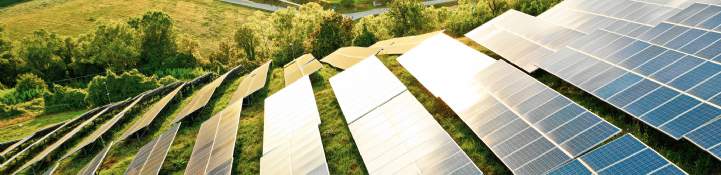
From 27 August, households across Great Britain can legally buy and use plug-in solar panels, offering a simpler and more affordable way to generate renewable energy at home. The systems, which plug directly into a standard socket, can cut annual electricity bills by up to £110 and provide around 20% of an average household’s electricity needs during daylight hours. Major retailers are rolling out the technology following extensive independent safety testing and the introduction of a UK-specific safety standard. The panels can be installed in gardens, outdoor spaces and some balconies, although planning and landlord or freeholder consent may be required in certain cases. For more information on solar photovoltaics, contact Henry Cody.
BUSINESS & economy
UK secures access to trading bloc
UK businesses now have full access to the Comprehensive and Progressive Agreement for Trans-Pacific Partnership (CPTPP) after Canada ratified the UK’s accession. Companies can now trade across all 11 member markets, giving access to an economic bloc worth almost £13 trillion when including the UK. The agreement, which the UK first signed in 2023, is expected to contribute around £2 billion annually to the UK economy over the longer term by reducing trade barriers and improving market access across some of the world’s fastest-growing economies. More than 99% of current UK exports to CPTPP markets are eligible for zero tariffs. In Canada, eligible business visitors can now stay for up to six months, facilitating trade, technical services and commercial partnerships.
English mayors to gain tourist tax powers
English mayors and strategic authorities will be able to levy a percentage charge on all short-term visitor accommodation, subject to national and limited local exemptions. Local leaders will set a uniform rate, consult locally and give businesses notice. Legislation is planned this parliamentary session, with investment plans expected by March 2028, subject to approval. The revenue will fund measures supporting regional growth, including the visitor economy. Accommodation providers will calculate, declare and pay the levy, although they may pass some or all of it on to guests. Strategic authorities may exempt a limited range of accommodation, potentially including tent and touring-caravan pitches, so businesses should monitor local plans.
Pressure grows over inheritance tax reforms
The debate over inheritance tax reliefs has widened beyond farming, with concerns now extending to the future ownership of UK manufacturing businesses. Research highlighted in Who Inherits UK Manufacturing? suggests many family-owned manufacturers face significant succession challenges, with the limited inheritance tax reliefs potentially increasing financial pressures on businesses seeking to transfer ownership between generations. Manufacturing representatives argue that greater tax liabilities could force asset sales, reduce investment capacity and undermine long-term business continuity. Similar concerns have been raised across the agricultural sector, where family farms often rely on inherited land and assets to remain viable.
More than 100 MPs have urged Prime Minister Andy Burnham to reverse the inheritance tax changes in the Autumn Budget. In a letter led by shadow environment secretary Victoria Atkins and Harriet Cross MP, and supported by shadow Defra minister Dr Neil Hudson, Conservative politicians from Westminster, Holyrood and the Senedd called for the APR and BPR reforms to be scrapped. They argue the changes are increasing pressure on family farms and rural businesses, whose wealth is largely tied up in land, buildings and machinery rather than held as liquid assets. The letter also states 6,300 agricultural businesses ceased trading between July 2024 and July 2025, the first 12 months of the Labour government.

OTHER RURAL NEWS
And finally… How do you lose an island?
Nature watchers in British Columbia have been left scratching their heads after a forested island appeared on a Canadian reservoir, then disappeared days later, before reappearing nearly 20 miles away. The floating island, measuring around 150 metres long and covered with almost 100 mature trees, was first spotted on Williston Lake, the largest freshwater reservoir in western Canada. Initial sightings were met with disbelief, with questions raised about the authenticity of the images. Now verified, experts believe the floating island formed over many years as trees and vegetation became established on a mat of woody debris. High water levels are thought to have set the island adrift, while changing winds and currents likely carried it into sheltered bays to “hide” before reappearing nearly 20 miles away. As the wandering woodland continues its journey, locals will now check twice before assuming an island will stay put.
If you have queries about any of the articles, please contact us.