
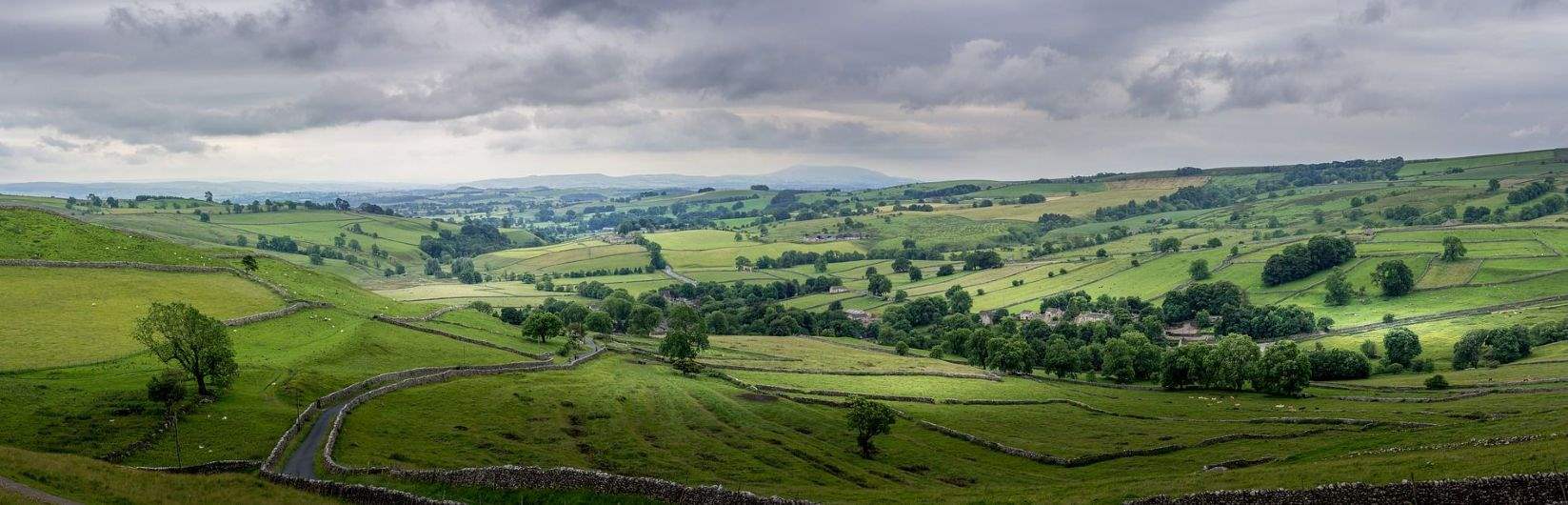
New productivity data shows that the food supply chain is performing well and adding value.
As consumers increasingly scrutinise their food choices, there is potential for farmers to target these markets and achieve premium prices; the UK organic food market increased in value by 5.3% last year, no doubt helped by these trends. Across the UK there is also an appetite to increase woodland cover: Scotland has just published its Forestry Strategy, including an ambition to increase tree cover by 3% by 2032.
FOOD & Farming
UK food chain out performs the wider economy
During 2017 productivity within the food supply chain increased by 1.5%, outperforming the sector’s 10 year average of 0.4% and the wider economy where productivity decreased by 0.2% in 2017. Increasing productivity is a key objective for UK agriculture as long term productivity gains have been greater in other western countries. The estimated total factor productivity for UK agriculture in 2017 is 2.7%, suggesting the industry has made a strong contribution to the sector’s overall performance. The combined Gross Value Added for the food chain amounted to £110 billion in 2017, 9% of the entire UK non-financial business economy.
Gene analysis to combat crop disease
Scientists can now rapidly exploit the natural disease resistance of wild crop varieties to protect farmed species and reduce the need for pesticides. The technique has been demonstrated by exploiting genes from wild grasses that confer resistance to stem rust. Ordinarily resistance genes must be selectively bred into domesticated varieties in a process costing up to £1 million and taking decades to complete. The new technique described in Nature Biotechnology cuts costs to a few thousand pounds and achieves the same result within months. It compares genetic material of hundreds of resistant and non-resistant wild strains of grasses in order to isolate the resistance gene. That gene can then be bred into farmed varieties more rapidly, either using conventional techniques or inserted using genetic technology.
Protected food names
Defra has set out the action it is now taking following a consultation covering the creation of a UK Geographical Indications (GI) scheme after Brexit. This would maintain protection for products such as the Cornish pasty and Stilton cheese. It is expected that in all Brexit scenarios existing UK GIs will continue to be protected by the EU’s GI schemes, however the UK needs to develop its own scheme and logos. Further guidance will be published before 29 March 2019 in the event of ‘no-deal’ or before the end of the implementation period in a ‘deal’ scenario.
Organic growth
The UK organic food market grew 5.3% last year and is now worth a record £2.33 billion according to the Soil Association’s 2019 Organic Market Report. The separate Global Organic Dairy Market Report 2019 has valued the UK organic dairy market at £351 million, ranking the country seventh. Perhaps surprisingly milk and yoghurt sales make up almost 85% of UK organic dairy sales, with cheese taking an 8% share. Continued demand growth is expected in the UK; organic dairy is currently 3.9% of the total UK dairy market.
POLICY
Farming minister quizzed on ‘no-deal’ trade
In a recent BBC Radio 4 interview, Farming minister George Eustice said that the Government would use tariff rate suspensions and generous tariff rate quotas on goods to ensure that food prices remain stable in the event of a ‘no-deal’ Brexit, and we would “probably apply the so-called MFN tariff on sensitive sectors such as beef and sheep”. When asked about the impact on sectors he said “our lamb would be slightly more expensive, sending it to Europe. So we’d probably see over time a slight reduction in lamb production but an increase in beef production”. Mr Eustice offered further reassurance that the Government has “introduced crisis measures through our Agriculture Bill so we have the ability to intervene to provide income support, should it be needed”. However the Agriculture Bill is still early in its Parliamentary journey and does not contain detailed policies so such powers will not be available for some time.
Proposal made for UK EU free trade agreement
International trade policy experts Shanker Singham and Robert MacLean have launched their proposals for a UK EU free trade agreement (FTA), with the support of former Brexit secretary David Davis and former international trade minister Greg Hands. Shanker Singham argues that agreeing an FTA with the EU “minimises disruption to trade with Europe while preserving the UK’s ability to strike trade deals around the world and make changes to domestic regulation, should it wish. It has been written with the goal of minimising disruption to businesses and consumers across Europe and the UK, as the UK leaves the European Union, while building a solid foundation for future trade and prosperity”.
Agri-Food chain coalition make call for ‘no-deal’ contingency measures
The coalition of European representative bodies Copa and Cogeca, CELCAA, and FoodDrinkEurope have stressed to Michael Barnier, EU Chief Negotiator on Brexit, that an orderly Brexit, including a transition period, is the only way to prevent there being a huge impact on the food supply chain. Nevertheless, the EU should prepare for a no-deal scenario and the sector is engaging in contingency and preparedness measures.
Water companies face scrutiny
Ofwat has assessed water companies’ business plans for 2020-2025; three out of 17 were judged ready to implement, with the remainder requiring more work. Environment Secretary Michael Gove said he "fully expects the revised plans to be more ambitious in delivering for customers and the environment” and emphasised the importance of having a "water industry that works for everyone" as well as the environment.
Environmental coalition Blueprint for Water has also analysed the plans and concluded that they show a "positive step change in environmental ambition from the water sector", but want all the companies to ensure they routinely factor in enhancing the natural capital that they rely upon. The companies propose to invest more than £5 billion in environmental improvements over the next five years, including over 350 catchment management projects to deal with environmental problems at source rather than ‘end-of-pipe’ solutions. This suggests the sector will increasingly need to engage with landowners over land management practices and underlines the potential for new income streams to be secured by providing public goods. In this vein, work has just started on a two year £2.6 million natural flood management project in West Yorkshire led by the National Trust. The project on Marsden Moor will use 151 hectares of new woodland, the restoration of 85 hectares of peat bogs and over 650 “leaky dams” to improve protection for 3,000 homes and businesses.
Natural England reaches ‘crisis point’
Understaffing at Natural England, budget cuts and an increased workload are putting thousands of environmentally important sites at risk according to an investigation by the Prospect union. It has concluded the agency is at “crisis point” with staff suffering a 1% pay cap for eight years in addition to a high workload. The agency’s budget has been cut by more than half in the past decade from £242 million to £100 million, whilst staff numbers have been reduced from 2,500 in 2009 to 1,500 in 2017. Natural England employees and other interested parties have warned “the environment is being affected so badly” and that “there will be no turning back the clock” on damage to sensitive sites.
Scotland: Community engagement in decisions relating to land
Last year the Scottish Government published guidance on engaging communities in decisions relating to land, which aims to ensure that legitimate interests are taken into account in a reasonable and fair way. The Scottish Land Commission has now published a short, clear, supporting protocol, which is intended to provide additional practical advice to support engagement. It covers general principles, and specific expectations which should be followed by landowners and other interested parties.

ENVIRONMENT & NATURAL CAPITAL
‘Traps’ halve polluting sediment in rivers
Sediment traps dug by the University of East Anglia (UEA) and the Wensum Alliance near the River Blackwater have reduced downstream sediment by 58% year on year. With only 14% of UK rivers being considered healthy by the Rivers Trust, it is hoped that sediment traps could reduce damage caused by sediments containing fertilisers and chemicals while also cutting costs associated with water purification.
New era for Scottish woodland
With a clear ambition to increase woodland cover, the Scottish Government has published its Forestry Strategy for 2019-2029. It has three key objectives:
•Increase the contribution of forests and woodlands to Scotland’s sustainable and inclusive economic growth
•Improve the resilience of Scotland’s forests and woodlands and increase their contribution to a healthy and high quality environment
•Increase the use of Scotland’s forest and woodland resources to enable more people to improve their health, well-being and life chances.
By 2032, the aim is for 21% of the country to be covered in trees; at present the figure is 18%. To achieve this, the annual woodland creation target will increase from 10,000 hectares to 15,000 hectares per year by 2024/25. This will include creating 3-5,000 hectares of native woodland each year.
PROPERTY & DEVELOPMENT
England: Tighter electrical safety rules for let homes
The Government’s continued focus on private rented sector safety and compliance will see new regulations introduced to ensure mandatory electrical inspections are carried out every five years by competent inspectors. The qualifications and experience required will be announced in due course; landlords who fail to use suitably qualified inspectors will face financial penalties. The intention is that the legislation would be applied first to new tenancies and introduced as soon as Parliamentary time will allow.
.jpg)
BUSINESS & ECONOMY
England: BPS entitlement transfer window opens
You can now transfer entitlements and land parcels for BPS 2019 until 15 May using the online Rural Payments service.
Wales: Farming Connect roadshows and grants
Two opportunities are approaching for farmers in Wales to receive support for their business; both require farmers to ensure their eligibility by registering with Farming Connect before attending a roadshow event. The Sustainable Production Grant can provide a business with between £12,000 and £50,000; roadshows are underway now and the application window opens on 4 March. The application window for the economic and environmental performance focused Farm Business Grant also opens on 4 March and its roadshows start on 5 March.
OTHER RURAL NEWS
Chickens produce anti-cancer drugs
Genetically modified chickens have produced eggs containing drugs that may be used to treat arthritis and some cancers. Incorporating a human gene within the section of the chicken’s DNA associated with production of the egg white, results in proteins and compounds being produced which can then treat diseases caused by deficiencies of that substance. The technique is up to 100 times cheaper than traditional manufacturing, because researchers believe the compounds could be produced in commercially viable quantities using ordinary chicken sheds, reducing the need for highly sterile clean rooms in factories.
And finally… Brewing goes back to 400BC
Fragments of charred residue associated with beer brewing have been unearthed by archaeologists working on the widening of the A14 in Cambridgeshire. The tell-tale signs of brewing, potentially from around 400 BC, are just some of the numerous finds unearthed by the project; a mammoth tusk and medieval village have also been discovered. Barley and malt production have long been associated with East Anglia, these fragments are believed to be the earliest evidence of beer making ever found in the UK.