

There’s a Scottish dominance to this issue as the Scottish Government has recently published a raft of legislation and policy proposals relevant to farms and rural property.
The Land Reform Bill which we covered two weeks ago has been followed by the Housing Bill, an agricultural reform route map update, simplification of planning for low-carbon projects and a consultation on banning caged egg production.
Our latest briefing note compares the approaches England, Scotland and Wales are taking with their new agricultural policies. Whilst the intended outcomes may be similar, flexibility for farmers differs considerably. Will the appointment of a new rural affairs secretary in Wales lead to any changes?
FOOD & FARMING
Scotland: Changes to agricultural support
Further details about the actions farmers and crofters in Scotland will have to take to receive agricultural support payments from 2025 have been unveiled in the latest update to the Agricultural Reform route map. It is designed to guide Scottish farmers and crofters through the gradual transition to the new agricultural support framework which will start in 2027. The update provides details on what actions farmers and crofters will have to take to receive agricultural support payments from 2025. The changes aim to ensure high-quality food is produced sustainably and in a way that tackles climate change and enhances nature.
From 2025 some of the changes include:
- A new maximum calving interval of 410 days will be added to the Scottish Suckler Beef Support Scheme, to help cut emissions intensity and make beef production more efficient
- The introduction of Whole Farm Plan conditions requiring farmers and crofters to complete two baselining activities from a list of options including carbon audits, biodiversity audits, soil analysis, the creation of animal health and welfare plans or integrated pest management plans
- New conditions for peatlands and wetlands under Good Agricultural Environmental Conditions (GAEC) 6 of Cross Compliance to help protect vital carbon stores.
We can expect the publication of more detailed guidance on each of the latest changes in summer 2024. For more information about plans and progress with the agricultural transition across the home nations see our latest briefing note which compares the approaches taken with their new policies.
Scotland: Banning cages in egg-laying
The Scottish government is consulting on options for phasing out the use of enriched cages to house laying hens for egg production in Scotland. Three options have been proposed:
- A 2030 ban on enriched cage production
- A 2030 ban on installing new cages leading to a 2034 ban on enriched cage production
- An information campaign to encourage all retailers to commit to stop stocking/selling eggs or egg products from enriched cages by 2034.
In 2016, the major supermarkets pledged they would stop selling shell eggs from hens kept in enriched cages by 2025 and some have already done so. Figures currently suggest that 82% of production is already from non-caged systems. The consultation runs until 25 June. It does not apply to gamebird production but a call for evidence about the use of cages in the sector is expected.
Basic income for farmers
A new campaign group Basic Income 4 Farmers is making the case for a universal basic income (UBI) for farmers in Britain and has released a report on the issue entitled “Sowing the seeds of stability”. It argues the “interconnectedness of UK farmers’ income security and the climate crisis cannot be denied; yet, neither issue is being addressed with the urgency it warrants”.
The group proposes a regular, unconditional cash payment made directly to farmers and agricultural workers. Based on its discussions with farmers, academics and unions, it suggests this approach would be an effective response to the pressing issues of food poverty, economic instability and the impact of the climate and ecological crisis. A UBI is not a new concept - one is in place for artists in Ireland and a UBI pilot for care leavers (adults who spent time in care as a child) is running in Wales. The group is developing proposals for a scheme and pilot.
POLICY
Scotland: Housing Bill published
The Housing (Scotland) Bill was introduced to the Scottish Parliament on 26 March, it will help to deliver the Scottish Government’s ‘New Deal for Tenants’ and some aspects of ‘Housing to 2040’, while contributing to the ambition to end homelessness in Scotland.
The Bill responds to the need to improve housing in Scotland and includes reforms to help ensure people have a safe, secure and affordable place to live. It deals with the proportionate use of a landlord’s property for rental purposes, aiming for a fair balance between protection for tenants and the rights of landlords. The proposals will strengthen tenants’ rights to help keep them in their homes and prevent homelessness. Further proposals cover long-term rent controls for private tenancies, new rights to keep pets and make minor changes to let property and stronger protection against eviction.
The Bill deals with the expiry of the rent cap (3% (6% in special circumstances) for 2023-24), which was replaced from 1 April with temporary amendments to the process of rent adjudication. This means tenants can refer a proposed rental increase to a Rent Officer or the 1st Tier tribunal for consideration, with the intention that rent increases should be tapered. This aims to protect tenants from sharp rises that could occur if rents move back to market levels in one step, whilst also allowing some rental growth to support private rented sector landlords.
Wales: New rural affairs secretary
Huw Irranca-Davies has been appointed Wales' new rural affairs secretary. He replaces Lesley Griffiths, who was in the role for eight years. It follows the appointment of Vaughan Gething as first minister and his consequent announcement of a new cabinet. Mr Irranca-Davies previously served as a Defra parliamentary under-secretary and shadow Defra minister. His experience will be needed as he faces several issues:
- There have been protests outside the Senedd largely due to aspects of the proposed Sustainable Farming Scheme (SFS). Particularly contentious elements of the policy relate to the 10% tree cover and 10% semi-natural habitat requirements
- Water pollution and the River Wye; as well as the SFS, changes to nitrate vulnerable zone regulations are also feeding into farmer frustrations. At the same time, agricultural pollution issues in the River Wye catchment have led campaign groups to launch legal action against both Natural Resources Wales and a major poultry producer operating in the catchment
- The lack of a Welsh green watchdog akin to the Office for Environmental Protection (OEP) in England and Northern Ireland has raised concerns about a drop in environmental standards in Wales
- A consultation on a Wales Nature Recovery Framework will close on 30 April. The framework deals with key factors such as halting species decline and restoring habitats.

ENVIRONMENT & NATURAL CAPITAL
Getting hydrogen tractors on the road
In our Market in Minutes report on alternative farm fuels we reviewed the pros and cons of future fuel options for tractors. One of the barriers to the use of hydrogen-powered tractors could be removed soon. The government is considering some changes to help enable the road use of hydrogen-powered non-road mobile machinery, this includes tractors, diggers, mobile cranes and other construction machinery. At present, they can only be used on public roads in Great Britain with an exemption known as a vehicle special order. This requirement could be dropped if the vehicle was designed to run on hydrogen rather than converted.
Licence to release gamebirds in protection areas
A new general licence for the release of common pheasants and red-legged partridge in specified Special Protection Areas (SPAs) and within 500 metres of their boundaries in England will be in place from 31 May 2024. The new GL45 will apply to 29 of the 31 SPAs that were covered by an individual licence last year, as well as to the Wash SPA in the case of releasing red-legged partridge. The new licence does not allow the releasing of gamebirds on any Special Area of Conservation (SAC) or within 500 metres of its boundary unless the land is also one of the SPAs listed in the licence. Those wishing to release gamebirds on an SAC, or its associated buffer zone can continue to use the GL43 licence. There is no requirement for shoots to apply or register to use the new GL45, but its conditions must be met, including:
- Reporting of release activity
- Vet checks and testing
- Implementation of biosecurity measures.
PROPERTY & DEVELOPMENT
Scotland: Planning simplified for low-carbon projects
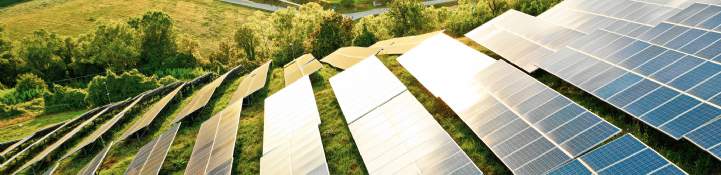
The planning process for zero and low-carbon technologies is set to be simplified in Scotland. Revised permitted development rights have been tabled and subject to parliamentary scrutiny they are expected to come into effect from 24 May. Changes include making it easier for property owners in conservation areas to alter or replace their windows to improve the energy efficiency of their homes. Those households will also be able to install solar panels in certain circumstances. Limits on the power output of panels on non-domestic buildings will be removed, allowing businesses to install more without planning permission. The changes will bring Scotland largely in line with England where similar changes were made last November.
The chair of Solar Energy Scotland and Savills director Thomas McMillan told Scottish Housing News “This change by the Scottish government makes the process of installing solar quicker and easier and is warmly welcomed”. He added, “Simplifying the planning process for rooftop solar will make a substantial difference to Scotland delivering 6GW of solar by 2030”.
Pressure from renters in rural areas
The number of households in private and social rent has increased by more than half a million in rural areas over the last decade. A new report from the County Councils Network (CCN) shows 450,000 extra households are privately renting in 2021 compared to 2011, a 31% increase. Over the same period, there were almost 200,000 fewer households who bought property in county areas (essentially county councils and rural unitary authorities). The CCN suggests more and more people have been priced out of London and into the surrounding counties.
The report goes on to say the rise in renting and unaffordability of properties has numerous impacts on county and rural councils. Waiting lists for council housing in those areas have increased by 10% between 2018 and 2023 (an increase of 40,000 households), temporary accommodation use is up by 52% over the last five years (an increase in over 6,000 households) and homelessness has risen 18% over the last three years (an increase of 4,500 people). The report argues that the constant tinkering with the planning system has led to an unstable and uncoordinated system and any future national planning policy should promote the delivery of homes of a mix of tenures, particularly on large sites.
BUSINESS & economy
Farmers need help following flooding
Financial support for flood-hit farmers must be made available as soon as possible through the Farming Recovery Fund, says the CLA. With 10 named storms so far this year and the wettest 12-month period in 150 years, thousands of acres of food-producing land have been waterlogged and impassable. Crops have been washed away or remained unplanted, causing significant financial impacts for farmers. The government had promised that farmers could apply for grants of up to £25,000, however, the Farming Recovery Fund is still not open. The CLA also pointed out fields are flooded to protect downstream settlements, without any compensation being offered to the farmers affected.
VisitScotland to close information centres
VisitScotland will close all 25 of its information centres over the next two years. Its new strategy is to influence tourists in the planning stage of their trip, with a focus on online resources and specialists for research and bookings. Research by the organisation suggests it has a greater impact when providing information before travel rather than when visitors are already on location. VisitScotland says there will be no compulsory redundancies, with staff instead being offered a range of options including reskilling, redeployment and voluntary redundancy.

OTHER RURAL NEWS
Lack of rural police
0.1% of British police officers are dedicated to fighting rural crime in England and Wales. 37 forces responded to a freedom of information request from the Liberal Democrats. Its request revealed just 258 police officers were deployed to rural crime teams and no force had more than 1% of its officers deployed to those teams. Eight, including Norfolk and West Yorkshire, admitted to having no such teams. While the Liberal Democrats said this demonstrated another example of neglect of rural issues, police forces responded by saying the party has failed to understand how British policing works.
And finally… Rural April Fool’s Day roundup
Even the most isolated rural sectors are not safe from April Fool’s Day pranks. For this edition of Landscope, we have rounded up (pardon the pun) our top three:
1. Search and rescue sheep
Dartmoor Search and Rescue Team will be deploying sheep to find stranded hikers. They will be equipped with hi-vis bandanas and bells around their necks so casualties can hear them coming.
2. Sniffer chickens
Swiss Police announced the newest weapon in their war on drugs: Drogenspürhuhn. That’s drug-detecting chickens to you and me. According to the police, the chickens are cheaper to train and keep than dogs and also come with a daily egg.
3. Canines and cardio
Can’t bear to leave your dog alone while working out? London gym chain Gymbox has the answer: Gymbarx, a workout class for gym-goers and their four-legged friends. Get ready for “furpees”, leash pulls and downward dog stretching to finish off.
If you have queries about any of the articles, please contact us.