
Biomass now accounts for 11% of UK electricity demand and there is scope for continued expansion, as the Committee on Climate Change has suggested it could double by 2050.
Smaller scale renewable energy generation has also expanded rapidly over the past decade, largely due to the Feed-in Tariff scheme which closed at the end of March. It was responsible for 837,722 installations and for creating an industry that can be viable without support. So given that over half of farmers made innovative investments last year to improve the performance of their business, could now be the time to look at renewable energy opportunities for your business?
FOOD & FARMING
Over half of farmers innovated last year but support lacking
Last year 54% of farmers introduced a significant innovative change to their farm business. According to Government statistics cereal farms and larger farms were more likely to innovate, whilst grazing livestock farms were least likely. The most common innovative change made was “investment in new or specialist machinery” (23% of farms). Whilst the most common motivations were to “increase productivity” (67%), “lower costs” (65%) and “make things easier for me and my staff” (64%). Looking forward, the results of Defra’s 2018 Farm Practices Survey show 33% of farmers intend to introduce a significant innovative change in the next 12 months. Grant funding to support investment in productivity improving equipment could be available via the Countryside Productivity Small Grants Scheme, however since announcing in October 2018 that £30 million would be made available in 2019 for a further round of the scheme, we await a date for applications to open. It is most likely delayed due to the more immediate workload the civil service faces due to Brexit, which introduces the risk that the application window could clash with the busy harvest period. Without sufficient investment, many farmers will not be able to prepare their businesses for the profitability challenge created by the withdrawal of direct payments.
EU bans UK’s most used pesticide
Fungicide chlorothalonil (CTL) will be banned by the EU due to health and environmental concerns. The multisite fungicide has been widely used in the UK since 1964 and has come to play an increasingly important resistance management role within farmers’ fungicide programmes. A review by the European Food Safety Authority (Efsa) could not prove that metabolites from the chemical were not damaging to DNA. The chemical has been shown to present a high risk to water-borne organisms, a particular point of concern given existing contamination of groundwaters. Separate research also revealed CTL makes bumblebees more susceptible to the nosema parasite.
The decision follows a number of other bans on pesticides in the UK like neonicotinoids, diquat and metaldehyde. Chris Hatfield from the NFU said the ban was “overly precautionary” and “failed to consider the particular importance of this pesticide”. A Defra spokesperson has confirmed that the UK Government will carry the ban over into UK law after Brexit. Growers are expected to have a use-up period for chlorothalonil up to 20 May 2020.
Food inflation peaks
UK food inflation has reached 2.5% according to the British Retail Consortium (BRC), the highest since March 2013. Volatile weather in 2018 has been blamed, with the ‘beast from the east’ delaying planting and the summer heatwave reducing yields and increasing prices. Depending upon how Brexit plays out, further inflation could be on the cards. Helen Dickinson, BRC chief executive, said “the bigger threat to food inflation remains the risks of a chaotic no-deal Brexit”. She added “parliamentarians from all parties must find a compromise” and warned of “higher prices and less choice on the shelves”.
Diets that cut life short
What we eat is causing 11 million early deaths per year, making it more lethal than smoking. Analysis published in the Lancet showed that too much salt is the biggest killer (3 million deaths per year) followed by too few wholegrains (3 million per year) and too little fruit (2 million per year). A lack of seeds, nuts, vegetables, fibre and omega-3 oils were also major factors. The study looked at highly publicised issues like sugar and fat intake too, but did not find them to be as much of a concern. Similarly, high consumption of red and processed meats did not pose as high a risk as diets lacking in fruit and wholegrains.
Mediterranean countries such as Spain and Israel have the fewest deaths related to diet (90 and 89 per 100,000 per year respectively). Asian nations such as Uzbekistan were at the other end of the scale (892 per 100,000 per year). The UK suffers 127 deaths per 100,000 per year according to the study, which is around 14% of total UK deaths. 83% of these are attributable to cardiovascular disease.
Burger King trial beefless Whopper
Burger King is trialling a meatless burger at 59 of its restaurants in St. Louis, USA. The Impossible Whopper, taking its name from Impossible Foods who will supply the vegetarian patty, will even ‘bleed’ like a conventional burger. Christopher Finazzo, the chain’s North America president, said “virtually nobody can tell the difference”. The chain says the vegetarian patty is not just for vegetarians; it hopes meat-eaters will try it too. Thrifty customers might be less keen as the vegetarian option will cost a dollar more.
Farming Rules for Water – grace period ends
The Farming Rules for Water were introduced in England on 2 April 2018. They included a one year grace period before the Environment Agency began enforcement, which has now expired.
POLICY
Future of Defra’s agencies under review
Defra is reviewing its agencies such as Natural England, the RPA and the Environment Agency to decide how they fit in with its post Brexit plans and requirements. Michael Gove, the Defra Secretary, said “we will need to look at the responsibilities of each of the non-departmental public bodies, and review whether or not they need to be extended. Some might be merged”. The recent Farm Inspection and Regulation Review chaired by Dame Glenys Stacey recommended that a new independent regulator for farming and land management was formed. This would take over responsibility for inspection and enforcement from a number of Defra agencies, so it is possible this idea forms part of the current review. Mr Gove also revealed that 65 Natural England staff and 30 from the Environment Agency have been seconded to Defra, due to Brexit. They form part of the 2,800 staff preparing for Brexit at Defra.

ENVIRONMENT & NATURAL CAPITAL
Is bioenergy the unsung hero of renewables?
Biomass provides 11% of the UK’s electricity and 96% of non-domestic renewable heat in the UK. The Renewable Energy Association (REA) has estimated that bio-based fuel technologies reduce CO2e emissions by 19.7 million tonnes per year and provide a total of 46,000 jobs. The Committee on Climate Change estimates bioenergy could double as a proportion of the UK’s primary energy supply by 2050. REA CEO Nina Skorupska has called on the Government to provide “a clearer ambition” and added “they promised to provide it, yet that’s two years overdue. Time for action”.
A nation of bird counters
1,400 farmers have recorded 140 species over a million acres; more than the Big Farmland Bird Count has ever known. Blackbirds and woodpigeons were the most commonly seen birds, reported by over three-quarters of participants in the 2019 survey. 30 species from the Red List for Birds of Conservation Concern were also seen, eight of which appeared amongst the most abundant species recorded. Most survey sites were next to winter cereals, grassland or overwintered stubbles. The survey was launched to highlight the positive work done by farmers and gamekeepers and is now in its sixth year. Norfolk led the way with 145 returns, but farmers from every English county, Northern Ireland, Scotland and Wales took part.
The RSPB has also released results from its Big Garden Birdwatch. Smaller birds such as the long-tailed tit and wrens were spotted less than in 2018 (27% and 17% respectively). The ‘beast from the east’ is thought to be partly to blame. House sparrows have made a comeback and increased by more than 56% over the 40 years the initiative has been running.
Invasive species inquiry launched
An inquiry into the threat of invasive species to biosecurity has been launched by the Environmental Audit Committee. The introduction of invasive species is becoming more common and the damage they cause is estimated to cost our economy almost £2 billion a year. Mary Creagh, Chair of the Committee, said “we want to identify the scale of the problem and assess how well prepared we are to cope with it”. Climate change has been blamed for encouraging invasive species to thrive in non-native environments, as well as globalisation. Mitigating the risks associated with trade will form part of the inquiry. The Committee is inviting written evidence until 5pm on Tuesday 30 April through the inquiry page.
Scotland: Tree planting guide
Scotland’s Tenant Farming Commissioner has published a Guide to Tree Planting on Tenanted Agricultural Holdings. It outlines the rights of both tenants and landlords to plant trees and provides information on applying for permission to plant. Four scenarios are covered, shelter belts, the creation of larger blocks over 10 hectares, converting a significant area of the farm to woodland and where landlords have a right in the lease to resume tenanted land to plant trees.
All Wales plan to cut emissions
100 policies aimed at meeting the challenge of climate change in Wales have been published. The report entitled ‘Prosperity for All: A Low Carbon Wales’ sets out a plan to “cut emissions and increase efficiency” and establish a “low carbon economy”. Through the plan, the Welsh Government hopes by 2030 to reduce agricultural emissions 28% below 1990 levels. Presently agriculture creates 12.4% of Welsh carbon emissions. It sets out three paths to do this:
• Improved efficiency of livestock production
• Improved crop and nutrient management
• Improved on farm fuel and energy efficiency
The Red Meat Development Programme (2018-2023), Animal Health and Welfare Framework and the Farming Connect Programme will all play a role.
PROPERTY & DEVELOPMENT
Garden towns announced
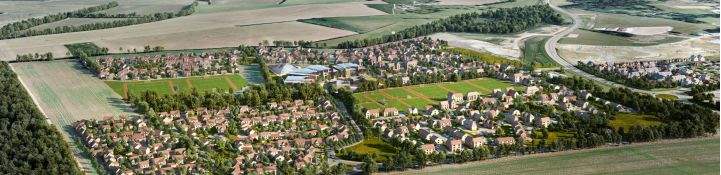
The Government has selected five successful bids from more than 100 proposals to develop garden towns. The successful bids will receive a share of £3.7 million to develop 64,000 homes. Garden towns are settlements of over 10,000 homes and the Government also has a garden community programme. Currently 23 garden communities are being supported by the Government. Kit Malthouse, Minister for Housing, said the communities “have the potential to deliver well designed homes at an increased scale, boosting the local economy and creating new jobs”.
Development plans cause countryside concerns
A poll, carried out by research company Survation on behalf of the Campaign to Protect Rural England (CPRE), has found that 74% of residents in the Oxford-to-Cambridge Arc believe house building proposals will have a detrimental effect on the rural landscape. Proposals aim to build a million homes in the arc by 2050. The CPRE calculates an area of land equivalent to the size of Birmingham would need to be developed. While there is support for house building, 59% of those surveyed by the CPRE did not back the outright scale of development being proposed. Paul Miner, head of strategic plans and devolution at the CPRE, called for a Strategic Environmental Assessment before proposals are taken further.
Separate research by the CPRE claims a million homes could be built across 2,600 brownfield sites in England. Two-thirds of those would be deliverable within five years. Rebecca Pullinger, the CPRE’s planning campaigner, said it is “a fantastic opportunity to simultaneously remove local eyesores and breathe new life into areas crying out for regeneration”. Despite the land bank available, development on brownfield sites fell from 61% to 56% of all new homes between 2016 and 2017, while homes on greenbelt land increased from 2% to 4% of all new homes.
New electricity wayleave payment rates
Following the NFU’s work with the Energy Network Association, annual English and Welsh wayleave payments for electricity network infrastructure within arable land have been revised. Compared to the 2016/17 list, the occupier payment for a single pole in arable land has increased by 10.6% to £24.71. Whilst the payment for a tower from 9.1m x 9.1m and less than 10.7m x 10.7m has increased 18.3% to £94.95.
.jpg)
BUSINESS & ECONOMY
Scottish Farm Business Income at a six-year high
The average Scottish farm income has risen to its highest level in six years. The latest figures for 2018 report an average profit of £35,400, a 19% increase compared to 2017. Despite this, 60% of farms in the survey would make a loss without subsidies. With direct payments removed the average farm would be trading at a £7,400 loss. Contract farming work and diversification were often effective measures of offsetting losses. Farms operating beyond traditional agricultural work had an income around £19,600 higher than those who had not diversified. Farms with fewer diversification opportunities such as beef and sheep units in Less Favoured Areas continue to have the lowest incomes, meaning that without support they would lose an average of £27,400. Asset values have decreased slightly while debt has risen. For most farmers this will not be of immediate concern because average liabilities are equal to just 12% of the value of assets, however even though equity is high much is invested in relatively illiquid assets.
Wage increases come into effect
Both the minimum and national living wage rates have increased. Those over 25 will now be paid 5% more than last year meaning a wage of £8.21 per hour. Those below 25 years old will receive slightly lower rises while apprentices will receive a 5.4% rise from £3.70 to £3.90. Chancellor Phillip Hammond said “this government is dedicated to increasing the wages of the lowest paid which is why we introduced the National Living Wage”. He added that the Government will be asking “a world-leading expert in the field, to undertake a review of the international evidence of minimum wages on productivity and employment”.
Time called on the Feed-in Tariff marks a new era for energy
The recent closure of the Feed-in Tariff (FIT) scheme marks the start of a new era for small scale renewable energy. Launched in 2010, it aimed to encourage the uptake of small scale renewable electrical generation and in turn kick start an industry in the UK. Whilst Government policy varied tariff rates and affected viability over the years, it has ultimately delivered an industry in the UK for domestic and commercial users to generate their own power. As of December 2018 there are 837,722 FIT accredited installations. 828,146 of them are solar PV with the significant majority being domestic rooftop installations. There are 6,858 installations with a capacity over 50kW, a tiny fraction of the number of installations; but they represent 44% of the total generating capacity installed. These larger schemes have primarily benefitted the rural and farming community with wind turbines, hydro schemes, anaerobic digestion and solar PV all featuring heavily on the agenda of land managers over the past decade. Naturally the question following the closure of the FIT scheme is ‘are there any opportunities left for small scale renewable generators?’, and happily the answer is yes. Wind turbines and in particular solar PV, have seen an amazing fall in capital costs over the past decade. Nowadays if the majority of the energy they generate is used on site it is generally worth the investment. If you would like to discuss renewable energy opportunities and crucially how small scale generators will be paid for their power in future please contact Henry Grant.
OTHER RURAL NEWS
Money for village halls
Village hall committees can apply for grants of up to £75,000 under a new Government scheme. In total £3 million is available to improve village halls and help them continue to play an important role connecting rural communities. There are 10,000 village halls around the country, 100 are expected to benefit from the funding which will contribute up to 20% of their project costs. Further information on eligibility and the application process is available here.
Great Farm Challenge Award
Young farmers with novel ideas for sustainable farming have been given the Great Farm Challenge Award. Ideas included using water bays for cattle to drink from, rather than drinking directly from the river and causing poaching, river bank damage and sediment pollution of the watercourse. Since 2011 over 1,170 students have taken part in the awards which are run by Natural England’s Catchment Sensitive Farming team, the Environment Agency and water companies.
And finally…
Eating dairy makes people happier
The ‘Department of Dairy Related Scrumptious Affairs’ known for its tongue-in-cheek milk marketing campaigns has conducted some serious research and found that adding a little bit of dairy to meals increases pleasure by 27%. The study in conjunction with Dairy UK, used headbands to monitor participants brainwaves, which behavioural psychologist, Dr Peter Collett says are a great way to measure how a person truly feels about dairy.