On the back of extraordinary macroeconomic circumstances and with volatility becoming increasingly normalised, the F&B sector has seen far more growth over the last 5-6 years than the property industry typically gives it credit for.
On the one hand, it has been operationally tough. On the other, the market has transformed and grown beyond recognition. Growth has been closely aligned with entrepreneurialism, inward investment, a natural fit with social media and hype, and an ability to adapt to evolving demographics. Savvy consumers are constantly on the hunt for value, convenience, reliability, indulgence and something new. Brand loyalty is increasingly hard to capture.
While the biggest brands remain dominant and the cornerstone of the market, new brands are disrupting the status quo and driving greater quality, diversity and opportunity.
In the last two years, a quarter of all retail and leisure store openings have come from brands with fewer than 20 stores in their portfolios. This reflects both an increasing number and more diverse mix of acquisitive brands.
Last year, 20% of all openings were from F&B operators. The Top 500 operators have collectively added an average of just over 2,000 locations a year for the last three years and are expected to match this in 2026. Around 20% of these brands were either independent or had no UK presence pre-Covid.
This four-part report mini-series takes a deep dive into three sub-sectors of F&B: Café, QSR/Grab & Go and Casual Dining, with a focus on brands operating across high streets, shopping centres and retail parks. We examine how trends have evolved through the decade so far, and what that tells us about how provision is likely to adapt over the next ten years. We look at the continued importance of the biggest brands, but also the significance of smaller chains in shaping the retail places of the future.
And with disruptor brands opening twice as many high street sites as in shopping centres and retail parks combined, the question is how we encourage earlier adoption of emerging brands within retail schemes. After all, point of difference is one of the key measures by which we build a place’s relevance and resilience.
Editions featured in this Spotlight:

Market Insights
F&B Series Highlights
Drivers for growth How has supply affected the tenant mix?
Find out more
QSR and Grab & Go Sector
Leading brands and disruptors
Chicken and health food trends
In conversation with Azzuri Group
COMING SOON
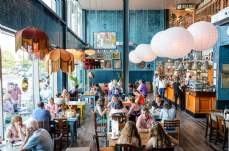

Coffee and Café Sector
Brand growth driven by convenience and quality
Independents and the search for the next big thing
In conversation with Kloud Concept
COMING SOON
Key themes:
F&B is a clear footfall driver for landlords. Convenience formats are scaling quickly via café and QSR formats, whilst casual dining is rebooting, with improved formats and quality across all sub-sectors.
- Market polarisation: Consumers seek convenience and value on one side and indulgence and discovery on the other. Tenant mixes must answer to both.
- Look beyond the Top 5: Around 20% of the Top 500 brands today were independents in 2020. First-mover advantage sits in brands ranking outside the Top 50 in each sub-sector.
- Strong capital is accelerating growth: Well financed brands and group consolidation will drive much of the growth in the next decade. The sector needs to reflect on past boom periods and avoid growing too far and too fast in the wrong locations.
- Balance covenant with relevance: Size of portfolio is no guarantee against failure. A brand engaged with its consumer, offering distinction and good experience, will command the best footfall.
- Social media engagement: Over half of consumers now use social channels to inspire their venue or menu choices. Viral posts are reported to have increased footfall by over 65%.
- Know when enough is enough: F&B now accounts for 25-30% of high street units and is rising in shopping centres and retail parks. F&B can be a game changer, but spend is finite and saturation a real risk. Good market and data assessment will be key to success.
Read the articles within Spotlight: Food and Beverage Property Insights below.