We look back on 21 years of the Savills Ski Report and examine the trends shaping the next generation of ski resorts, from resilient property markets and branded residences to the rise of year-round mountain living.
Jeremy Rollason and Kelcie Sellers discuss the latest Savills Ski Report. Filmed at London Dock, The Alpine Fusion showroom.
Introduction
The French expression “plus ça change, plus c’est la même chose” is a cliché often applied to historical events, human nature and, indeed, politics. Since we first published the Savills Ski Report 21 years ago, much has changed, but some things, including demand for prime ski property, have remained remarkably consistent.
In the early 2000s, many European ski destinations experienced strong property price growth. Resort markets across the Alps benefited from low borrowing costs, with ECB rates at an attractive 2%, lower income tax rates, buoyant market confidence and a comparatively benign geopolitical backdrop.
Fast forward to 2026-27 and the landscape looks very different. Interest rates remain higher, lending criteria are more restrictive, bonuses, for those fortunate enough to receive them, face greater taxation, and global uncertainty continues to weigh on sentiment. Yet demand for mountain property has rarely been stronger.
Last year, we reported prime market price growth of 3%, while ultra-prime values rose by an impressive 9%. Similar trends have emerged over the past 12 months, with prime markets increasing by 3.8% and ultra-prime markets delivering another robust performance, rising by 5.3%. So, what is driving this seemingly relentless growth?
In Savills recently published Spotlight on Wealth Trends, Geneva, Gstaad, St Moritz, Crans-Montana, Zermatt, Kitzbühel, Verbier and Villars all feature among the world’s top 30 destinations for next-generation wealth. Several of these markets, alongside Aspen and Vail, also rank among the world’s leading wealth hubs. With Forbes reporting a record number of self-made billionaires under the age of 39, it is easy to see why these increasingly year-round destinations continue to attract a wealthy and globally mobile audience.
On the subject of year-round appeal, we have long published our Winter Resilience Index. While this remains an important measure, this year marks the first time we have also ranked ski resorts for summer resilience. Notably, Ischgl in Austria and Mont-Tremblant in Canada perform particularly well, supported by long summer seasons, busy events calendars and strong connectivity.
However, the combined rankings reveal some of the most interesting insights. Ischgl ranks an impressive eighth overall, while Grimentz also secures a place in the top 10.
We hope you enjoy this year’s report, which includes a deeper exploration of the evolving branded residences market (page 14). Finally, our review of champagne prices across ski resorts worldwide delivers a surprising conclusion: those in search of the best value may need to look beyond Europe.
Santé!
Prime and Ultra-Prime Ski Prices
Despite continued economic uncertainty, prime ski property markets have demonstrated notable resilience. We explore the average asking price per sq m across leading ski resorts.
Find out more
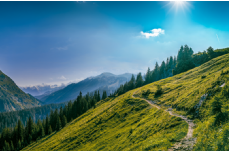
Ski Resort Resilience
Our three indices explore ski resort resilience in Europe, Asia, North and South America by assessing factors including temperature, season length and altitude.
Find out more
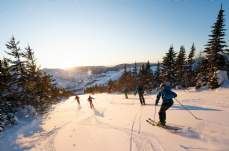
Branded Residencies
We unpack the evolution of branded residences across global ski resorts and the appeal of hospitality-led services, top-end amenities and operational expertise.
Find out more
Market overview
Record participation, rising investment and sustained buyer demand are reinforcing the long-term strength of global ski property markets. Skier visits have reached an all time high of 399 million, according to the most recent data. Growth across Asia, alongside continued investment in resort infrastructure, is helping to expand the appeal and accessibility of ski destinations globally.
Several North American resorts faced difficult ski conditions in the 2025-26 season, with snow shortages reported across the Rockies. The average national snowfall at ski resorts totalled just 112 inches (284.48 cm), below the 10-year average of 169 inches (429.26 cm). This decline was concentrated in the traditional destinations in the Rocky Mountains such as Utah and Colorado; however, resorts in the Northeast and the Southeast reported one of their best seasons in the past decade, supporting the national numbers. As a result of lower snowfall, ski visits in the United States dropped to 52.6 million in the 2025-26 season according to the National Ski Areas Association, a fall of 14.5% year-on-year.
European ski markets had a strong season, with healthy interest across the Alps. In Italy, the Winter Olympics in Cortina d’Ampezzo contributed to a 41% increase in overnight stays in Alpine and Apennine municipalities compared with 2022-23, the season before the Olympic announcement. In Austria, ski visits rose 3.8% year on year to 54 million in 2025-26, putting the country ahead of the US despite similarly weak snowfall. Increased investment in snowmaking helped offset conditions; without it, the Austrian Cable Car Association estimates Austria could have recorded 10.4 million fewer visits. In France, the Three Valleys, including Courchevel and Méribel, continue to see strong interest, with 24 million cable transport journeys expected in the 2026-27 winter season.
The Asia Pacific region, particularly China and Japan, continues to see strong growth in alpine culture and winter sports. Japan’s resorts cater to domestic and international visitors, with resorts across Hokkaido evolving as premium destinations. China has seen the region’s strongest visitor growth, with government estimates suggesting an 89.2% year-on-year increase to 118 million visits in 2025-26. Significant investment in resort infrastructure, alongside improved rail and air links and ski equipment travel services, has supported this growth. Combined with a growing focus on healthy lifestyles, these investments are helping build a larger domestic skier base.
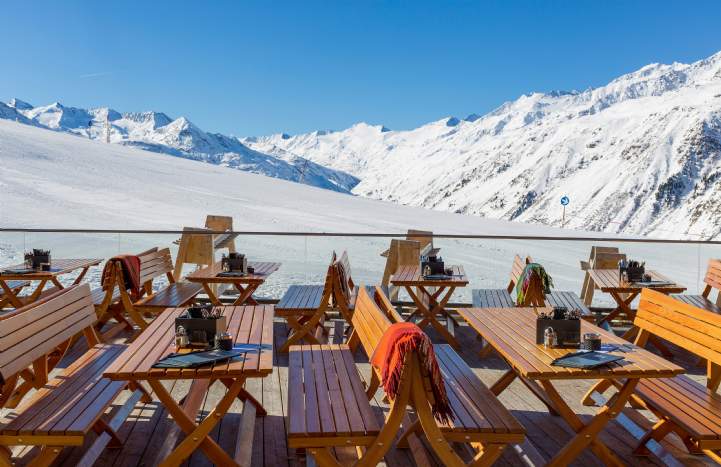
ON-MOUNTAIN DINING – The Price of the Piste
For many skiers, mountainside meals are as much a part of the ski experience as the slopes themselves. From sunny terraces to fireside restaurants, on-mountain dining transforms a day on the slopes into a memorable occasion.
The cost of on-slope dining varies considerably across global ski destinations, with Courchevel 1850 topping the ranking for family dining. A piste-side meal for a family of four, comprising a shared starter, two adult main courses, two children’s main courses and a shared dessert, averages €188. Aspen follows closely at €186, while Gstaad ranks third at €177. At the other end of the table, Whistler Blackcomb offers the greatest value, with an average cost of €84.
While value can still be found within established resorts, the results underscore the premium attached to ultra-prime Alpine destinations. Val d’Isère and Méribel complete a French-dominated top five for meal prices, at €165 and €164 respectively.
Families can ski to lower-altitude areas within the Three Valleys and visit Courchevel beyond its 1850 enclave, where meal prices average €124. Cortina d’Ampezzo also offers comparatively accessible pricing, with an average family meal costing €115.
Champagne Index
To mark the 21st edition of the Savills Ski Report, we have examined the price of a bottle of champagne across on-piste restaurants in leading ski resorts.
Champagne prices tell a slightly different story from restaurant dining costs. Gstaad is the clear outlier, with the average price of a bottle reaching €231, nearly three times the €77 recorded in Niseko. Kitzbühel ranks second at €138, followed by Courchevel 1850 at €131. Aspen, Méribel and Andermatt cluster closely behind, all averaging between €127 and €130.
For buyers and visitors, these costs provide another lens through which to assess the broader ski resort experience. Ultra-prime destinations command a clear premium, but high-quality skiing and après-ski do not always require the highest level of spending. Whistler Blackcomb, Niseko and Cortina d’Ampezzo demonstrate that internationally recognised resorts can deliver a strong lifestyle offering while remaining comparatively affordable for on-mountain dining.
For investors and analysts alike, these trends highlight the importance of understanding not just headline growth figures, but also the underlying market dynamics that drive them. Timing, regulation, and buyer behaviour all play critical roles in shaping the trajectory of ski property markets, and will continue to do so in the years ahead.
Watch Savills Ski experts unpack the report and explore insights across leading ski destinations
Savills Ski experts discuss the trends shaping leading global ski destinations
Read the other articles within The Ski Report below