
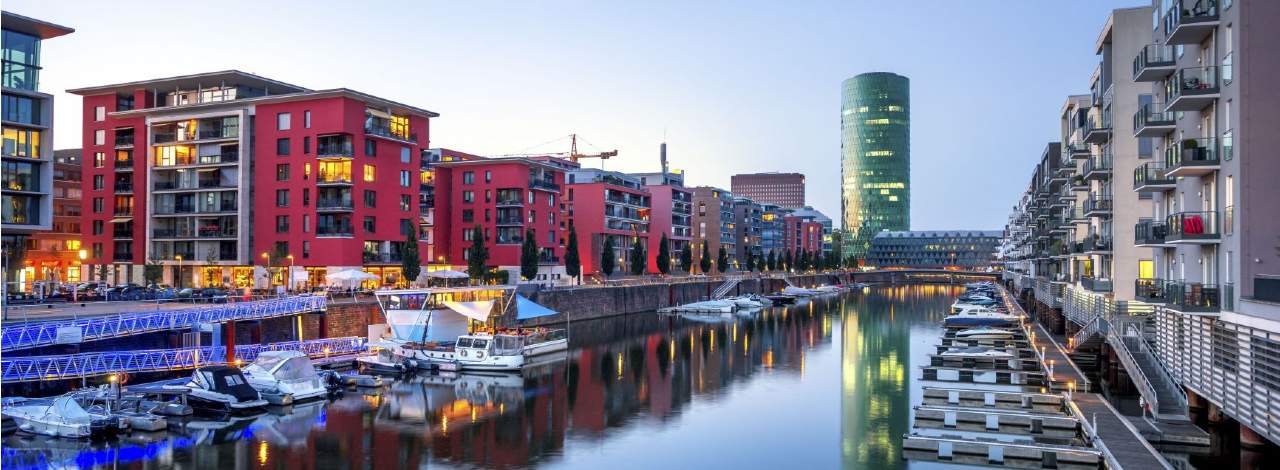
Quarters – new and sought-after
Text: Matti Schenk
For several years, quarters have been an increasingly emerging trend in the German real estate market. The press is reporting more and more on the subject and an increasing number of developments are being labelled as quarters (see Graph below).
However, no standard definition or classification of a quarter (in German: ‘Quartier’) has established itself in the German real estate market to date. Many developments in progress that contain the word ‘quarter’ in their name, for example, comprise a single use type. These are frequently purely residential quarters. For the purpose of our analysis, we will use the following classification:
- The term ‘Quartier’ must appear in the project name or the accompanying description.
- The quarter must be a development from a single source.
- There must be a mix of uses within the quarter. No use type should account for more than 95% of the total floor area.
The rising number of quarter developments is also increasing the supply for investors. This opens up the possibility of acquiring an entire quarter or individual buildings. Quarter properties in Germany changed hands for almost €2.8bn in 2019, which was the highest figure from the last five years (see Graph below). Around 73% of the transaction volume in 2019 was attributable to acquisitions of entire quarters (see Table above). Purchasing an entire quarter gives investors the opportunity to diversify their rental income within one asset. For large quarters in particular a single owner could even simplify marketing and the creation of a unique image. If successful, this should hopefully increase occupier satisfaction, resulting in more stable and possibly even higher rental income over the long term.
There were more than 90 quarter-related transactions over the last five years, which were equally divided between the acquisition of entire quarters and the purchase of individual buildings in quarters. Sales of entire quarters had an average volume of €179m while partial disposals averaged around €54m. The rising transaction volume can likely also be explained by the great interest of institutional investors in high-value product. The acquisition of an entire quarter allows the placement of a large capital sum, which is simultaneously diversified across several use types (see Table below).
The most active investors in the market for quarter properties over the last five years included open-ended special funds, private-equity funds and insurance companies and pension schemes (see Graph below). Sovereign wealth funds accounted for around 7% of the investment volume for quarter properties, which is more than four times their share of the overall commercial investment market. This could be related to the character of many larger quarter developments. These are trophy assets in prime locations of the major cities and, in addition, are normally new-build properties. Indeed, 70% of all quarter-related transactions over the last five years were forward sales. Existing properties sold had an average age of six to seven years.
The high demand for core product combined with the growing supply of quarters fitting this description is likely to be reflected in further growth in transaction volumes. Consequently, the significance of quarters in the real estate investment market is likely to rise.