
.jpg "Talking with Twemlows Stud Farm")
How long has the stud been operating?
32 years – it was started by my father, who was originally a dairy and pig farmer operating a herd of 250 cows, as tenant farmers on the Haywood Lonsdale Estate. He decided to diversify away from dairying and pursue his passion for breeding horses, when the opportunity arose to purchase the farm, which coincided with milk quota achieving a good price. My brother Tulis, runs a sister business which focuses on Sport Horse stallions and rare breeds. I joined my father in the business 24 years ago, and my two daughters are now very involved ensuring a fourth generation is ready to take the business forward.
How has the farm been adapted to meet the needs of a stud farm?
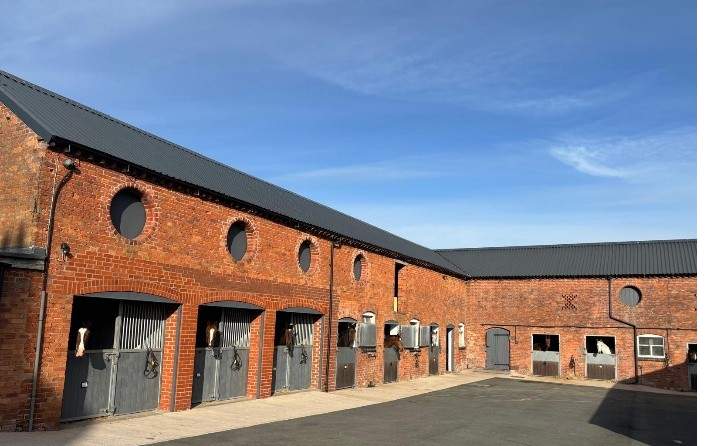
The livestock buildings were converted over 20 years ago into the stud farm, the good ventilation required for dairy cow housing meant the barns were perfect for adapting to equestrian use. The cubicle housing was taken out and the buildings were converted into stabling, and loose housing for over wintering both pregnant mares and our recipient herd.
Over the years the business has expanded adding winter housing barns, and the old cheese dairy was converted into our own state of the art veterinary centre, with a yard office and lecture theatre.
Over 600 horses pass through the stud farm in a year, of which about 50% are showjumpers, 25% eventers and the remaining are polo ponies, rare breeds and the hobby horse.
Over the winter, the farm houses about 280 horses, which is largely the recipient mare herd, youngstock and some client pregnant mares.
Did you always know you wanted to take on the legacy of the operation?
Yes, but originally I thought it would be a dairy farm, however when I came back to the farm my father had diversified into the equine business.
How many mares do you tend to cover in a season, have you seen a rise in the use of embryo transfer (ET) and recipient mares over artificial insemination (AI)?
Our current annual book includes 350 client mares for AI, and 150 pregnant recipients for ET and Intra Cytoplasmic Sperm Injection (ICSI) out of a recipient herd of 270 (recipient mares have a foal every other year). Demand for our transported embryo service and ICSI have increased in the past few years.
How many foals are you expecting this season?
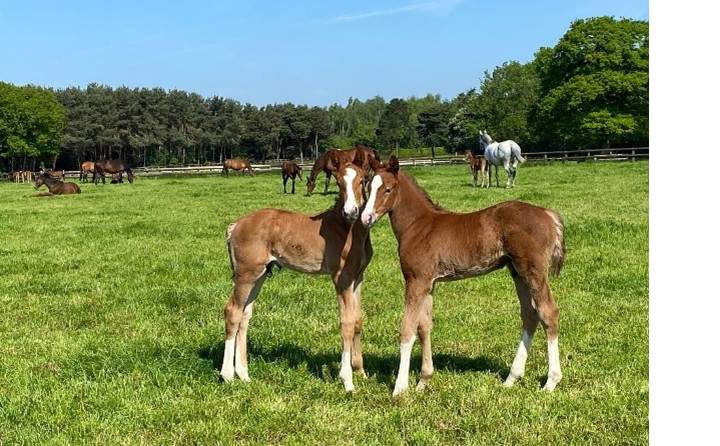
The foaling unit has 100 plus mares booked in. In addition some mares will arrive with a foal at foot, for AI and ET.
What do you consider to be the most important features of Twemlows in terms of infrastructure for the operation of the business?
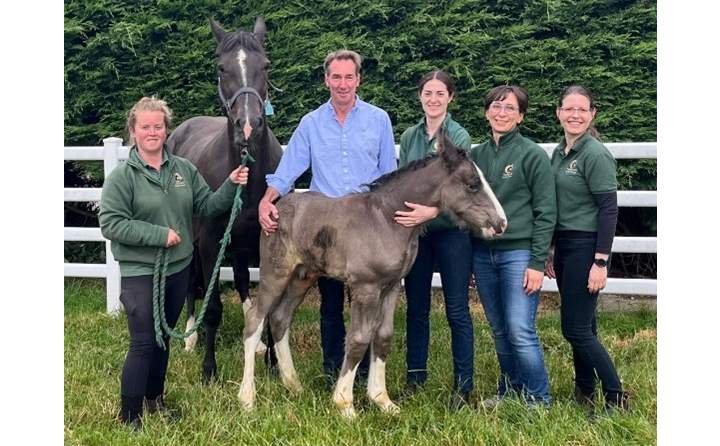
We have a very dedicated and experienced stud management team, supported by our own specialist equine reproduction team of four resident vets.
We designed our own purpose built and state of the art veterinary centre, to ensure we are pioneering and leading the way for sports horse breeding in the UK.
The stud also has a separate foaling unit of 80 stables, in the converted traditional barns which used to house the parlour and pig buildings.
Increased winter housing in barns, and a variety of railed paddocks including individual turnout.
Invested in an eight-horse, undercover walker and all-weather arena for the competition mares who remain in working fitness whilst here.
We have the capacity to cope with a high volume of mares, supported by good record keeping and specific stud management computer programmes.
How do you manage your pasture with such high numbers of mares and foals? Do you have any top tips for good paddock management?
Our grassland management system is essential to ensure we use it as efficiently as possible. We have 200 acres of pasture and rotate our main fields which have about 50 mares per field.
Reseeding, over seeding, application of our own composted muck, aerating, harrow and rolling, fertiliser application, spraying and the use of a paddock sweeper are all key, to keeping the grass growing.
Rotation of paddocks for youngstock, regular worming and doing everything we can to limit the worm resistance factor are important elements of our paddock management system. We also employ an agronomist to help ensure our paddocks are providing the best quality grass they can.
You have a lot of top-class competition horses to stay. Do they stay in work?
Mares in work and competing usually stay for about three weeks and have use of the horse walker and can be ridden in the arena. We also provide individual turnout paddocks, and one-to-one care with a dedicated staff member, who runs the ‘princess barn’.
What has been the most significant achievement for Twemlows? Any standout moments, foals or mares you have had the pleasure of working with?
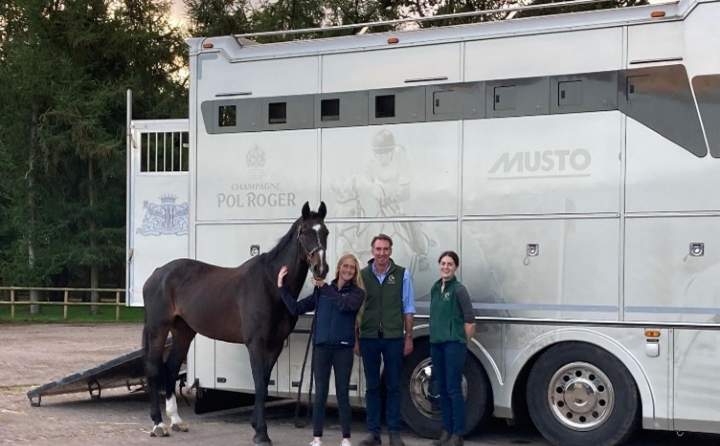
We are fortunate to have mares who have competed at the Olympics and show jump internationally with some of the world’s top riders. The Olympic medal winning rider Scott Brash had a foal born on the morning of the interview and a Laura Kraut owned mare had flown in from Florida on Monday.
Our support of the Rare Breeds breeding programmes
The technological development, which has contributed to the high pregnancy rate now achieved.
Achieving an ICSI pregnancy via Genetic Salvage and producing a Shire foal in 2023
Expansion of the recipient herd, which is now available to clients and veterinary practices throughout the UK
What do you see as being our biggest threat to the business?
Biosecurity, disease outbreak/control. We have a small isolation yard for new mares arriving without recent bloodwork to ensure the biosecurity is at the forefront of the business.
Access to Europe following Brexit, which has contributed to increased complexity with import and exporting semen; generating onerous complex documentation for compliance.
The changes to inheritance tax mean we have had to future proof the business for the fourth generation.