

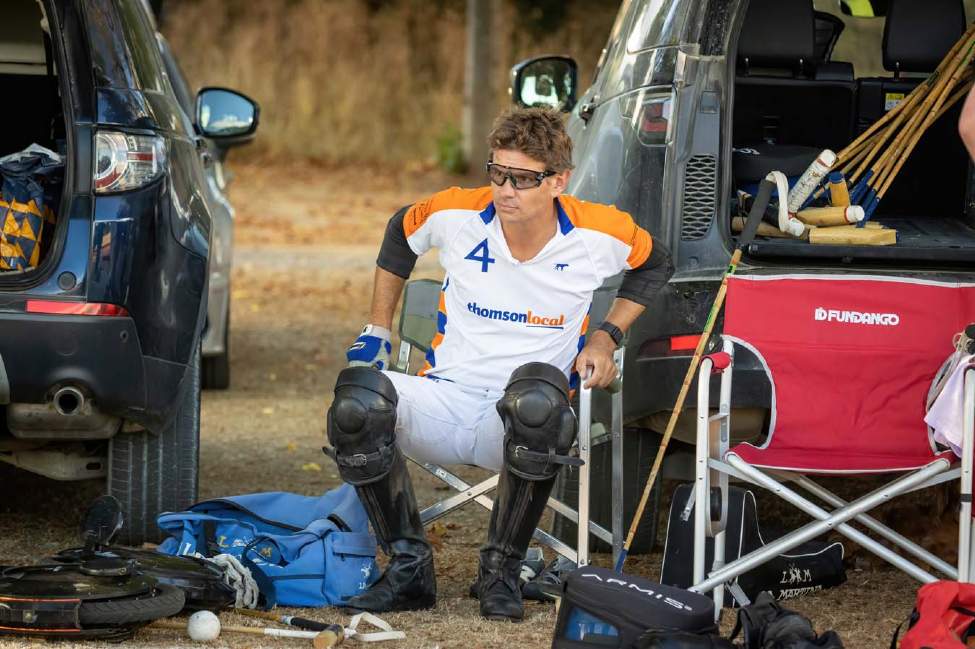
David Ashby is a professional polo player and has played all over the world. He founded Oxford Polo in 2011 and is based at Kirtlington in Oxfordshire. Lizzie Goodman from our Rural Property Management team recently caught up with David to discuss his new expansion project at Oxford Polo, the day-to-day activities on his yard and his passion for teaching others in the sport.
Tell us a bit about Oxford Polo and how you started the club
I founded Oxford Polo in 2011 after many years playing at home and abroad as a professional, but decided to make polo an all year round career by offering coaching to local schools, individuals and pony clubs. Fast forward to 2023 and we now have a team of coaches as well as offering a comprehensive service to the polo world through team management, transport logistics, player mentoring and most recently launching Oxford Polo’s Arena Club.
Oxford Polo has recently embarked on an expansion programme, could you tell us about the project and the opportunities it brings?
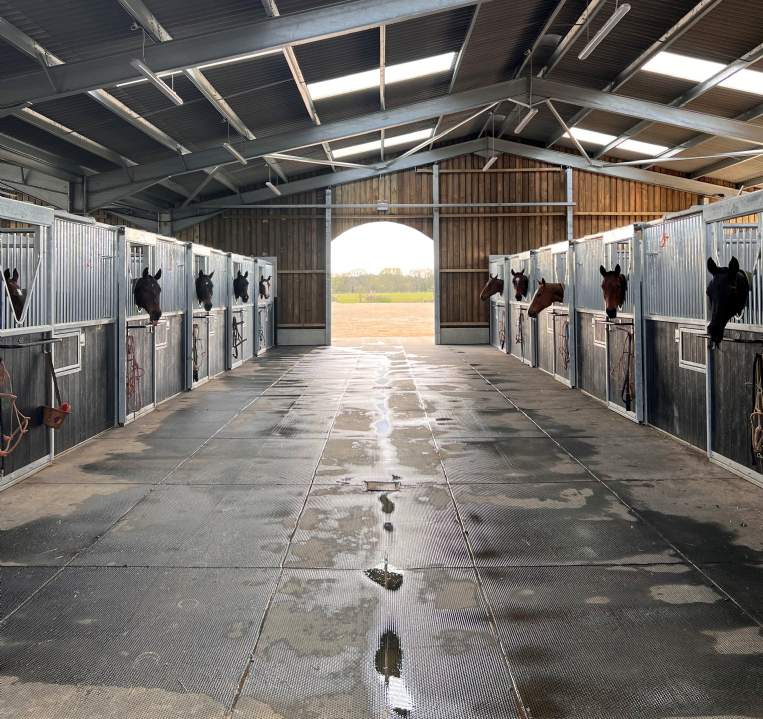
Having been based at Kirtlington Park Polo Club for 11 years, the opportunity came up in 2020 to purchase 85 acres next door. Since then we have completed extensive groundworks to facilitate the construction, building 66 stables in two barns, a full size arena and exercise track. This has enabled the polo community to play all year round and for us to offer a more detailed training programme using the floodlit arena as well as utilising our polo field.
What do you and your grooms see as the best asset to your yard?
Having had a completely blank canvas to build on, we hope to have designed a very efficient yard both for horse welfare and horse husbandry ensuring the optimum approach to training with state of the art facilities.
The exercise track that is crucial for fitness and performance work also has a schooling arena and we have used Andrews Bowen GP mix surface to ensure the horse is in maximum comfort when training.
What is the typical day in the life of one of your polo ponies?
We have over 120 ponies on site ranging from school ponies that teach all standards of players, to elite equestrian athletes as well as the youngstock who are starting their education. A medium/high goal pony will be exercised twice a day – it may have physio or farrier appointments as well as down time within in its string.
What do you think is the biggest difference between a polo yard and yards for other equine disciplines?
We have a number of professional players based with us and once the season gets underway their schedules are exceptionally busy with trucks going out in different directions. As with all yards, the office is the hub for keeping deliveries, appointments and training schedules on track and I have a great team to ensure operations run as smoothly as possible.
In terms of facilities, a polo yard tends to have a set track which is flat compared to a normal uphill gallop facility and it is often wider in order to have a string of ponies exercised at the same time.
How does the UK polo scene fair on the world stage?
On the world stage we are definitely No 2 after Argentina thanks to the high goal action during The Queen’s Cup at Guards Polo Club and The Gold Cup at Cowdray Park Polo Club. But the UK has a fantastic range of clubs for all levels around the country, and it would be wrong to just focus on the top level. The infrastructure here is phenomenal for nurturing homegrown talent both at home and abroad. As a coach and mentor myself I believe the UK is one of the best places to start playing polo whether as a child through the Pony Club, SUPA (Schools and Universities Association) or as an adult looking to get into the sport.
.jpg)
Caption: Quel Domage triumph in the 2022 Holden White Cup. L-R: Hector Worsley, Dane Csaszar, Hugh Humfrey and David Ashby.