
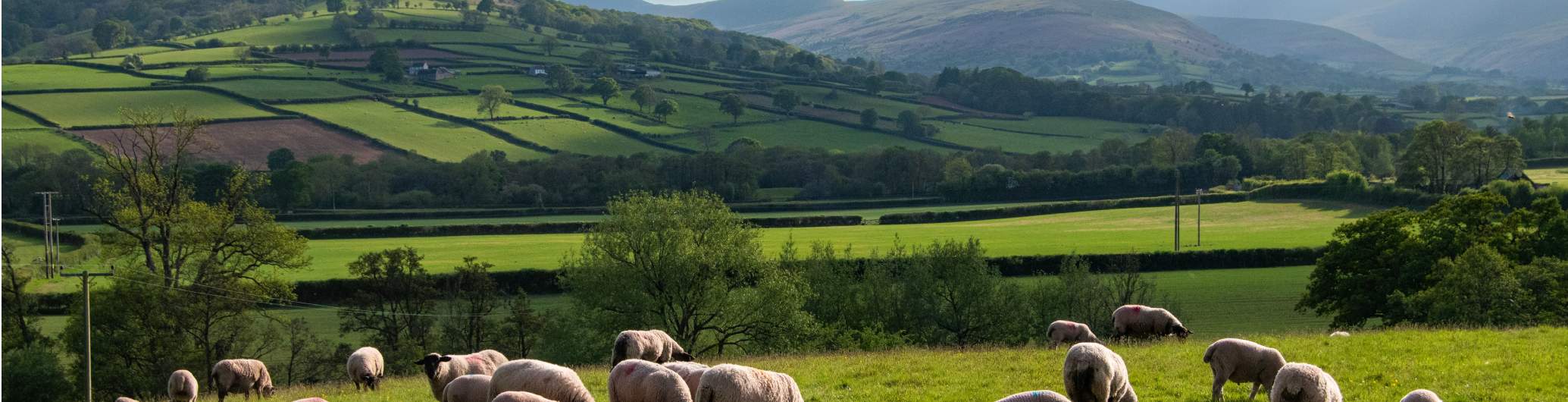
Each year brings familiar challenges for farming businesses. A warm, wet winter was followed by a prolonged dry spell, impacting some later-established cereals and forage crops in particular. Beyond the weather, evolving policy, regulation, and taxation legislation continue to add pressure, increasing the need for families and businesses to conduct careful forward planning.
After two years of relatively high land supply in the West Midlands the market in 2025 saw levels return closer to the five-year average. Supply reduced by 10% in the year to October, mirroring the national 13% drop from the high point in 2024. Average land values softened slightly (by around 2%), particularly for general cropping areas, following a third year of challenging arable margins.
Headline figures, however, don’t reflect the resilience of the rural market. While arable pressures eased competition for land, strong demand persists in parts of Shropshire, Cheshire, and the Marches, where sold prices achieved well above averages or guides.
Despite autumn milk price pressure, dairy farms received strong interest, and the poultry and pig sectors remain highly active as welfare rules and planning changes drive demand for established or potential sites. The West Midlands and Marches continue to offer some of the best mixed farms and estates, attracting long term buyers from the UK and overseas, alongside now established interest in carbon and conservation markets.
While 2026 likely brings continued challenges to the rural economy, the sector remains resilient and forward-looking.