
.jpg "Meet the team – Annabel Gray")
Describe what you do in a nutshell.
I am part of Savills Estate Management team based in Carlisle and I provide landlord and tenant management and consultancy advice on all rural property types; although I have a real passion for helping estate owners manage their let equestrian properties.
How has your passion for horses influenced your role at Savills?
Horses are the reason I am a Rural Surveyor. I was brought up in Yorkshire and have ridden ever since I can remember and it is because of horses and being out in the countryside, that I developed an interest in rural property.
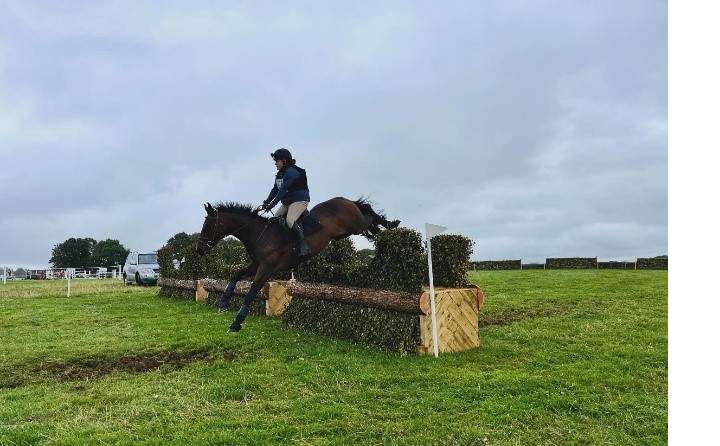
In my youth and up until my early twenties, I evented up to 3* level, until a back injury unfortunately forced me to retire from this level of competing. As well as eventing and prior to my career as a Surveyor, I worked on a breaking/eventing yard in Ireland, a show jumping yard in Holland and a 5* eventing yard in the UK.
Throughout these travels I was lucky not just to visit, but to ride at some of the most prestigious and beautiful estates. I used to think to myself, “I wonder who manages these estates, what an amazing job” and that’s what led me to read the Rural Enterprise and Land Management (REALM) course at Harper Adams University in Shropshire, before joining Savills as a Graduate in 2018.
As part of my role at Savills, I am involved in managing a number of privately owned Estates with let equestrian properties ranging from a few acres of grazing lets, to much larger livery yards and professional rider/training yards. Having a breadth of practical knowledge has its benefits with understanding and identifying the challenges facing both landlords and tenants in the sector.
When I’m not advising clients on their equestrian properties, I am managing everything from agricultural and residential let properties, to carrying out commercial rent reviews on niche enterprises like paintball sites. No two days are the same, which I love.
What are the main pieces of advice you would give an equestrian property owner?
First, it is essential landlords are proactive about ensuring repair covenants are being met by both parties. Routine maintenance to fences, land and buildings can avoid significant problems and costs further down the line.
A properly drafted lease is critical. A lease should fully reflect the use and condition you would wish to find the property in, to ensure the land and property are going to be properly managed. This principle applies to any letting whether it’s a small grass field or a fully equipped stud farm.
I would also recommend that any landlord thoroughly vets a prospective tenant and where appropriate has sight of the prospective tenant’s business plan, finances and references to ensure the rent and lease covenants can be supported.
Outside of work, what can you usually be found doing?
I still have the eventing bug, and often spend my weekends training or competing (without many red rosettes) on my horse Snip. After nearly losing her to laminitis a few years ago, no minute spent in the saddle is taken for granted.