
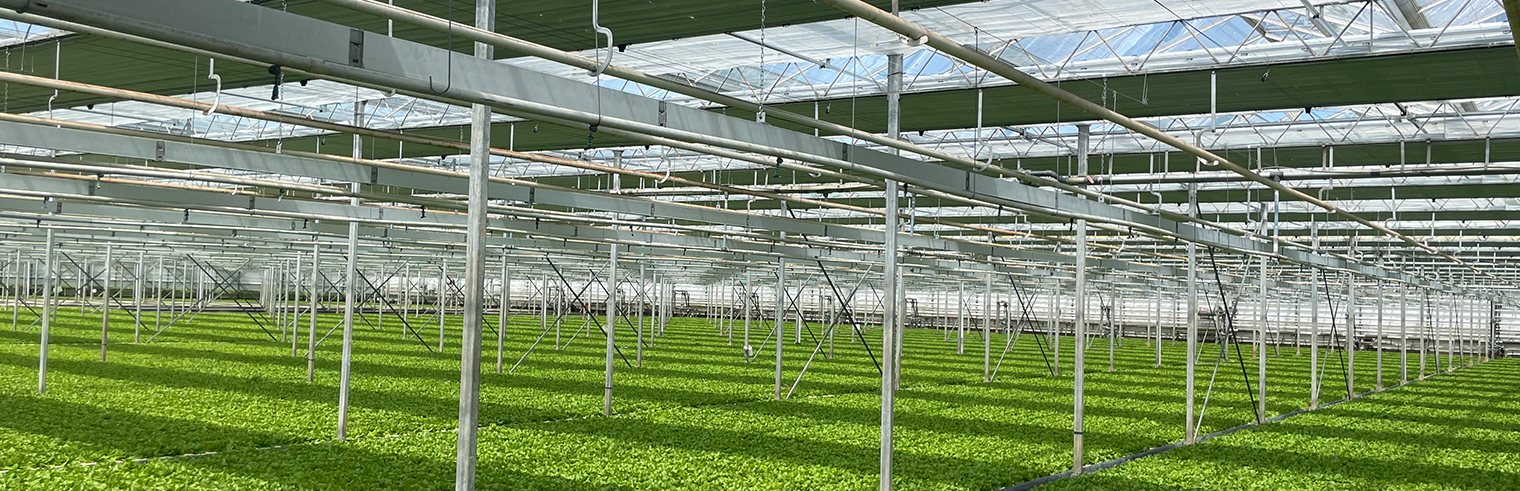
The past couple of years have been challenging for the horticultural nursery sector with significant increases in operational costs, issues with staff attraction and retention, and Brexit as well as changes in trading legislation.
Rising energy costs in particular have been a challenge as horticulture has not benefited from any kind of dedicated energy subsidy during the ongoing energy crisis. As a result the competitive advantage for glasshouses now lies principally in energy solutions, modern climate control, automation and scale.
Larger size allows for economies of scale and purchasing power, especially of raw materials. The cost of achieving this physical scale for new builds has escalated over the last couple of years due to the inflation in the prices of steel and glass. CambridgeHOK, a glasshouse build contractor, advised that glass and steel costs rose 10% to 20% in the first six months of 2022. Only now are build costs showing the early signs of stabilisation.
However, inflated build costs have made glasshouses built within the last say five years more appealing for those looking to enter the market or expand their production; particularly those existing facilities which benefit from more advanced climate and environmental control systems, incorporating renewable energy such as Combined Heat and Power (CHP) plants. Buyers also prefer glasshouses with higher levels of automation which can reduce labour requirements, as well as result in higher volumes of crops. In glasshouses which are fully automated, the water, temperature, light, fertilisers and CO2 (where required) will all be computerised.
In recent months we have seen an increase in interest in British horticultural properties from Dutch growers as they have also been suffering from high energy costs and the high-tech nature of Dutch horticulture has not extended to a reliance on renewable energy. Instead, Dutch glasshouses use around three billion cubic metres of gas a year, or about 8% of the national total. Added to this, Dutch companies growing non-edible plants see growing in the UK as a way to circumnavigate the peat bans that come into force at the end of 2026 which will make it harder for the Dutch to export to the UK.
Therefore, whilst it has been a difficult couple of years for the sector as energy and other operational costs start to show signs of decreasing, there are some reasons to be cheerful, particularly for owners of modern glasshouses of scale with renewable energy sources and high levels of automation.
We are currently marketing a commercial glasshouse equipped with hydroponic growing system enhanced by LED lighting with ancillary accommodation. For further information please contact Ian Simpson 02074 098 060 isimpson@savills.com.