.jpg "Holiday Parks - A Hot Market")
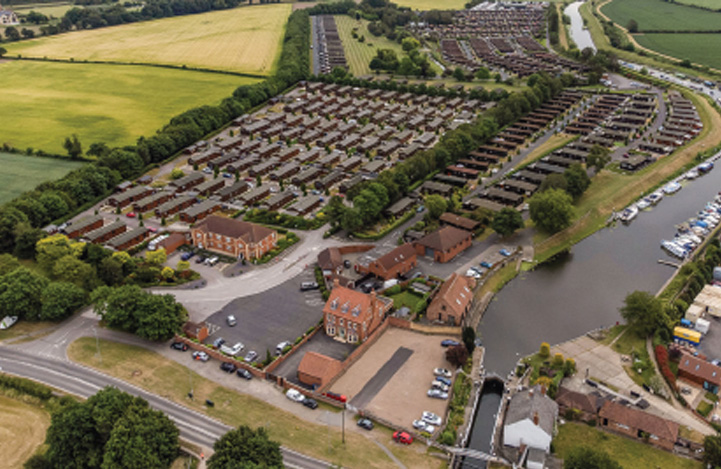
Sitting within a niche marketplace of less than 3,000 parks in the UK, residential parks have been increasingly targeted by investors from alternative sectors. They have been drawn to the asset class due to minimal barriers to entry despite significant competition, simple operation and stable revenue generated by the collection of pitch fees (rent) and commissions on new sales and transfer of homes (secondhand home sales) which can be as much as 10% of the selling price. Often referred to as mobile home parks or park home estates these parks are now appealing to corporate investors who are attracted by an asset-secured low risk investment. It is estimated that large operators owning above 10 parks equate to just 10% of the overall marketplace (number of parks owned). A growing number of these larger operators are receiving corporate backing and often also own holiday parks and marinas, due to the similar business model.
In terms of operation, parks of this nature often have age requirements set out in park rules, a minimum age of 55 is typical thus targeting the retirement market and is particularly popular with home owners who downsize to release capital. Park homes are sold under licence agreements providing security of tenure to the home owner through the ‘Mobile Homes Act’ - the site owner retains the freehold land thus sustaining the value of the park. Many parks are marketed as retirement communities and offer low-cost accessible accommodation with likeminded people, providing spacious independent living often in semi-rural locations. Many residents will remain in occupation until end of life or until assisted care is required. From an operational perspective this creates a natural churn of owners on parks providing further income above that of the site pitch fees (which are typically paid to the park owner monthly).
A relatively recent trend has seen park owners wanting to modernise the residential park image more along the lines of eco-bungalows appealing to the growing number of environmentally aware purchasers who are seeking energy efficiency and a low carbon footprint. Manufacturers of park homes are evolving rapidly to accommodate this new trend