
Holiday Parks - A Hot Market

Hotels - Staycations, Inflation and the UK Hotel Investment Market

International travel has returned, in a meaningful sense, for the first time since the pandemic. However, the surge of bookings, rising costs and staff disruption has caused chaos in UK airports and this disruption is forecast to continue over the coming months. Combined with the price of foreign holidays increasing by an additional 16%, amidst a cost of living crisis, this is driving some families to book UK breaks as a guaranteed and sometimes cheaper alternative.

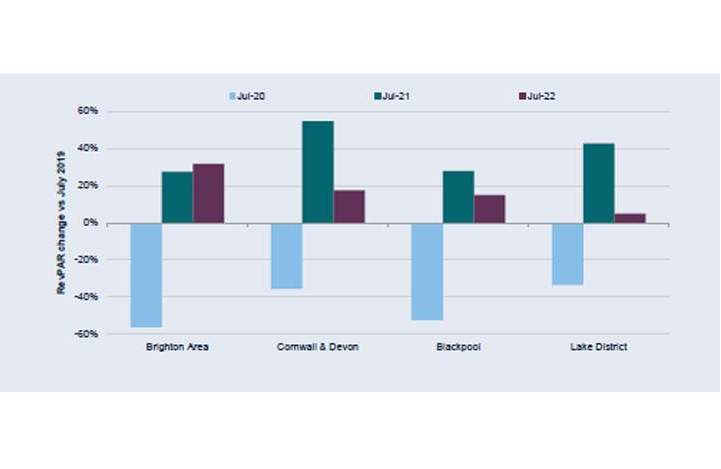
This activity was observed in UK hotel booking data from SiteMinder with a surge in UK hotel bookings to popular UK staycation destinations such as Cornwall, Devon and the Lake District during and immediately after reports of disruption in airports around the UK. That said, most commentators do not envisage the same scale of demand that we saw this time last year.

Out of four identified key UK staycation markets, all reported positive Revenue Per Available Room (RevPAR) growth in July 2022 compared to 2019 levels, albeit slower growth was reported in three compared with 2021. While July 2022 occupancy levels dropped below 2019 levels, positive RevPAR growth was driven by improved Average Daily Rate (ADR).

Operators needing to pass on energy cost and wage increases to consumers mean ADR rates will need to be held as we move into Q4 and 2023. The challenge which may arise is the resilience of consumer demand in the face of squeezed discretionary spend. This may be offset to a certain degree by rising costs for overseas holidays, potentially making staycations look comparatively cost effective.
Over the longer-term, we believe staycation demand is here to stay, aligning with the pre-Covid trend of support for more sustainable holiday habits such as travelling domestically. Booking.com’s April 2022 report revealed that 81% of travellers confirmed that sustainable travel is important to them, with nearly a quarter of people opting to travel to destinations closer to home over the last 12 months to help reduce their carbon footprint. Since the relaxation of travel restrictions in 2020 the UK’s regional hotel market has seen resilient demand from investors seeking opportunities. This investor pool has been formed from a range of types of purchasers, from owner operators through to private equity backed platforms.

Investor demand has remained strong in spite of the challenge of sourcing debt and more recently, the additional challenge of general inflationary cost pressure impacting profitability.

We anticipate that in spite of wider macro-economic challenges, this demand will remain resilient. This is driven by the strength of the underlying consumer demand profile (as discussed above) and the attractive yield profile available in the regional hotel market. In addition, assuming consumer demand remains resilient, hospitality businesses potentially offer a hedge against inflation due to their apparent ability to pass costs on through raising prices (whereas commercial investments are only able to achieve this where rent review clauses allow and some time lag).