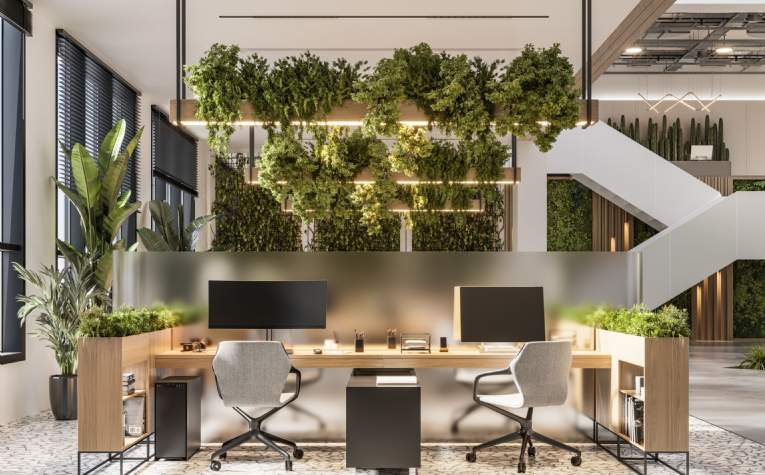
Flexible office space—also known as serviced office or coworking space—is emerging as a compelling solution for companies seeking more responsive and cost-effective ways to accommodate employees. While it’s often perceived as a “startup” or “young company” trend, the coworking industry—already substantially developed abroad—is undergoing significant expansion in the U.S., catering to businesses of all sizes and from many industries. Mature corporations, once wary of flexible office space, now recognize the value it can bring to both real estate and workplace strategy.
Whether supporting hybrid work models, bringing teams closer to their clients, or supplying creative hubs for innovation, coworking spaces serve as an effective tool for companies wanting to respond more nimbly to rapidly changing needs. In this blog, we delve into the key benefits of flexible office spaces and how they empower businesses to remain agile and competitive in today’s market.
Flexible lease terms, minimal risk
Serviced office space solutions offer companies an effective way to balance cost and benefit while minimizing risk. By providing shorter lease terms and scalable options, flex spaces allow businesses to avoid long-term commitments and make decisions aligned with their strategic goals.
Larger corporations have typically overlooked incorporating flexible office space into their real estate portfolios, but this perspective is slowly shifting as companies recognize its value in navigating uncertainty. Whether used as a stopgap solution or a long-term strategy, coworking spaces empower organizations to explore a broader range of options, avoid rushed decisions under pressure, and better align their office needs with their evolving priorities.
Rapid setup and market entry
One of the stand-out advantages of coworking space is the ability to quickly get operations up and running. Flexible office space agreements can often be signed and activated within days, or even within 24 hours. This speed is critical for companies facing unexpected delays, such as construction setbacks on a long-term office space, or those with temporary needs, such as fulfilling a nine-month contract in another state or country.
Flexible office spaces also make it easy for businesses to enter new markets with minimal upfront costs, allowing them to establish a presence where it's strategically or financially advantageous, such as meeting tax requirements or securing proximity to clients. The quick turnaround and adaptability of flex office spaces ensure businesses can focus on their operations without delay.
A safety net for growth and flexibility
Coworking space providers can ideally serve as a “back-up generator” for businesses, offering a ready-made solution for surge days, unexpected personnel growth, or temporary operational needs. When teams outgrow their primary office or require extra space for a project or event, serviced office spaces provide a seamless overflow option without the hassle of long-term commitments.
Businesses can also leverage the amenities that come with these spaces—such as fully equipped meeting rooms, shared common areas, and on-demand workstations—enhancing productivity and employee satisfaction. Co-locating with a flex space provider ensures businesses can handle sudden changes with ease while maintaining operational efficiency.
Support for travel and remote work
Companies can more effectively support travel and remote work with flexible office space. By utilizing flex office platforms, businesses can minimize unnecessary spending on underused space while providing employees with access to convenient coworking locations. This allows team members to collaborate with colleagues when needed, work closer to home—for example, in suburban areas, which are seeing a significant uptick in coworking facilities—or find a productive space while traveling. The result is a win-win: employees save time and money on commutes, while companies achieve greater space efficiency and utilization across their workforce.
An amenity that adds value
In line with broader real estate trends, positioning serviced office space as an amenity is becoming a powerful tool for attracting tenants to office buildings. As businesses increasingly prioritize amenities in their site selection strategies, serviced office operators within traditional office buildings provide a significant advantage, enhancing the overall value of the property.
Flexible office space options expand the user experience with additional areas for meetings, networking, and team gatherings, without requiring tenants to invest in large build-outs for conferencing facilities. This flexibility appeals to a wide range of company types, from established firms to start-ups, allowing landlords to attract a diverse tenant base. Furthermore, coworking spaces foster a collaborative environment where professionals, entrepreneurs, and freelancers from different industries can interact and share ideas, driving innovation and cross-industry networking. By offering scalable, on-demand workspace, landlords can meet the needs of businesses of all sizes while enhancing the appeal and utility of their properties.
Reinforcing ESG goals
For companies looking to support their ESG goals, utilizing flexible office space provides significant benefits. Environmentally, these spaces often promote resource efficiency by optimizing space utilization and reducing waste associated with underused office areas. An increasing number of coworking spaces incorporate sustainable practices, such as energy-efficient systems, green certifications, and shared infrastructure that lowers a company's carbon footprint.
Socially, they promote collaboration, inclusivity, and employee well-being through thoughtfully designed, community-oriented environments that can help remote employees feel closer to colleagues and company culture. In the UK, there are many examples of coworking spaces being used effectively for community outreach and nonprofit initiatives. From a governance perspective, adopting flexible workspaces demonstrates adaptability and proactive risk management, aligning with ESG principles by reducing long-term lease liabilities to enhance organizational resilience.
Smart solutions for work and real estate
Once the exclusive realm of start-ups, flexible office space is now a solution that appeals to a much wider range of businesses. Incorporating coworking space into a workplace strategy and real estate portfolio is not only a smart financial decision but also a meaningful way to enhance the employee experience. By leveraging flex office space as a tool to optimize costs and presenting employees with more choice in where they work, companies will capture greater efficiencies while driving productivity to new heights.
About Workthere: Combining technology with insightful advice, our experts help businesses find the right space to work and grow. Whether you’re looking for a co-working desk, a private office or your own self-contained office, we offer options for all types of individuals and businesses, from start-up to large-scale corporations.