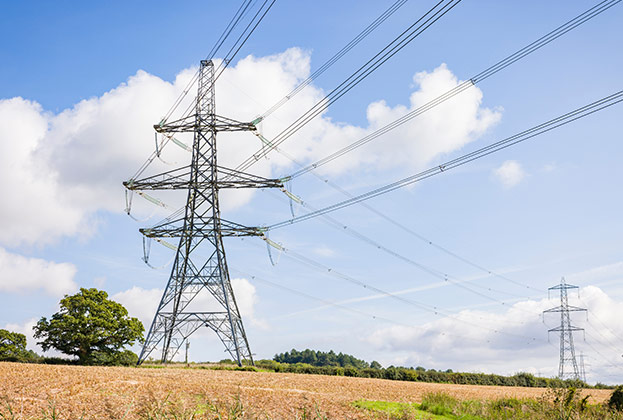
The Government’s proposed changes to the National Planning Policy Framework (NPPF) are welcome in that they lower the barriers, albeit marginally, to gaining consent for onshore wind turbines in England.
The 2015 changes to the NPPF led to an effective ban on wind farms and a consequent reduction of circa 95 per cent in planning permissions in England. In contrast, development activity has remained high in Scotland and wind farms also continue to be promoted successfully in Wales and Northern Ireland.
More wind farms expected to come forward
In England a small number of projects have gained planning permission since 2015, although these have mostly been for single turbines as distinct from large-scale wind farms. Following on from our commentary in July we can now expect this trickle to increase on the basis of the NPPF changes, dependent on how the Energy Bill proposals to aid local communities in gaining advantage from future wind generators take shape, and how developers work alongside local communities to create social value through investment in jobs, skills and other locally-based initiatives.
What about solar?
In relation to the implementation of solar as a renewable energy source, an amendment proposed to the Energy Bill would see a limitation of 20 per cent on the area of 500 acre-plus solar farms comprising land within the top three grades of Natural England’s agricultural land classification i.e. “Best and Most Versatile” land.
In reality this would not have acted as a constraint to most of the solar farms developed so far, albeit an increasing number of larger ground mounted schemes can be anticipated to meet the Government’s target of quintupling solar generation by 2035 – a deployment rate of approaching 100MW a week.
Importantly, solar involves neither a permanent nor necessarily a total cessation of farming activity on land, which is a point accepted by Inspectors in planning appeals relating to solar farms. Increasing interest in “agri-voltaics” follows evidence that farming alongside solar panels can be successful and further diminishes the portrayal of solar as a technology that requires a choice to be made between food or electricity.